Gardens
As Olivia Laing says in her article on gardens (FT April 2 2026) even Donald Trump does not dictate the order of things here. Seasonal accommodations, decay and renewal, birth and death - the whole of life plays out in view. That is why I typically spend several hours a day digging, pruning, nurturing, chopping, burning and so on. My vegetables not only provide sustenance but also a confrontation with the real.
And of course, a garden is never finished. As Montaigne noted, ‘I want death finding me planting my cabbages, but careless of death, and still more of my unfinished garden’ (my emphasis, quoted in Sue Stuart-Smith’s ‘The Well Gardened Mind …’). As I enter the age range when I am certain to die, I start to put my affairs ‘in order’. But that can’t include my garden which will always be beyond such neat and tidy endings.
Over the years I have been drawn to Edwin Smith’s photograph taken at the Villa Garzoni in Collodi, Tuscany. It’s not the super-vibrant garden photograph that we are used to seeing from the likes of the Chelsea Flower Show. But there again, those are not real gardens, just pretences. And black and white “re-introduces ‘intelligence’ into photography at nearly every step”, as Smith was to go on to say.

© Edwin Smith Villa Garzoni, Tuscany 1961
I think the reclining figure is the goddess Ceres. Smith probably photographed the other statues in the garden, Neptune, Apollo, Bacchus, and Daphne, but I can find no evidence for that. I assume that he must have.
Edwin Smith was an architectural photographer steeped in the understanding of line, surface and perspective, meticulous in his approach with an old large format camera, and well known for re-visiting locations to see how things continued to look. Smith had a good eye. The subtleties of light, texture, and particularly composition provide a felt sense of place, a recognition of something other worldly, gothic, if you will permit me to use that word. I do so deliberately.
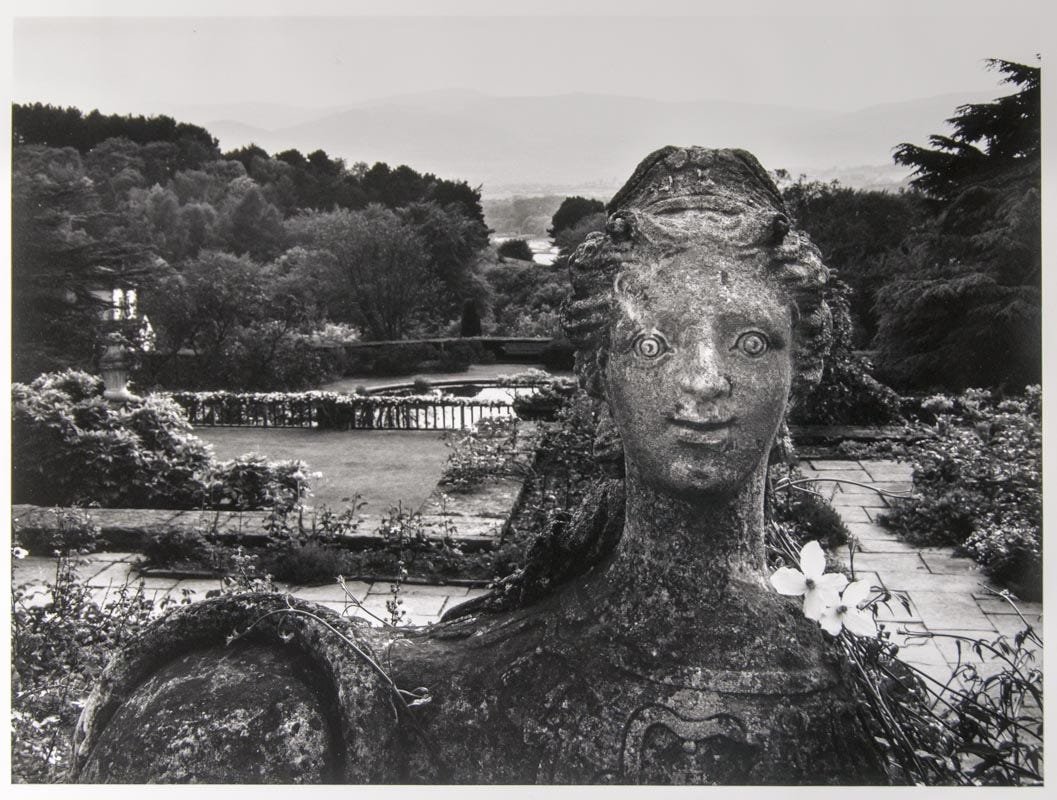
© Edwin Smith, Sphinx, Bodnant Gardens
Today the word ‘gothic’ suggests the dark, mysterious, or romantically macabre.
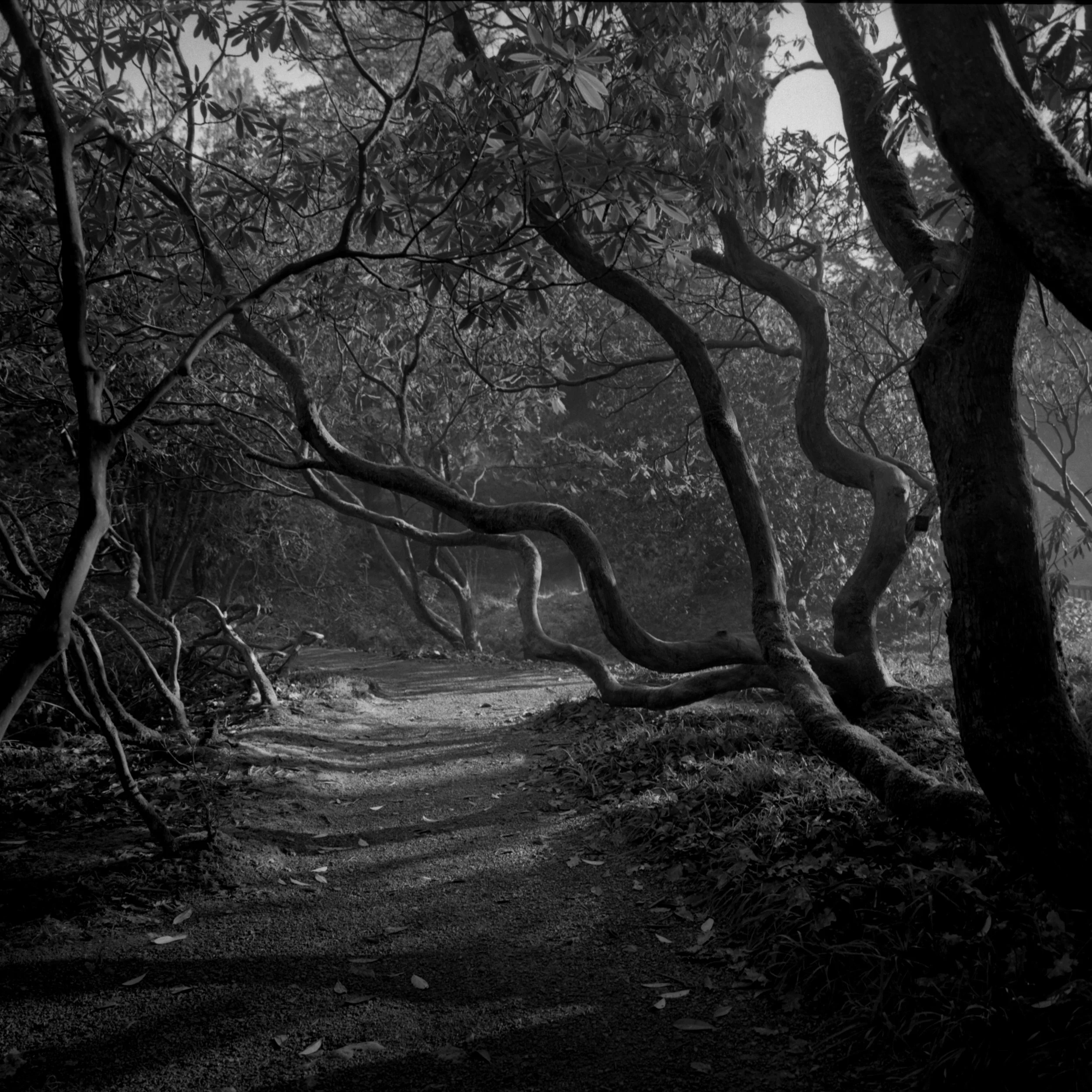
© Tony Cearns - Bodnant Gardens Ilford HP5+ film, 2026.
The word has evolved from meaning a tribal designation (Goths and Visigoths) to an architectural style through a literary genre to a present-day cultural sensibility, best seen in the English town of Whitby at certain times of the year. But there is more to it than this.
Gothic architecture had a populist dimension.
Gothic cathedrals were community projects that involved entire towns over generations. The Baroque, however, emerging in the 17th century, was associated with absolute monarchy and aristocratic power. Its overwhelming ornamentation, theatrical effects, and complex symbolism were designed to inspire awe and reinforce hierarchy.
As I gaze on Edwin Smith’s photographs, a sense of timelessness and melancholy draws me in. The idealised sculptural forms suggest human presence in virtue of its absence. The idea of solitude and stillness bringing about a calm detachment (or is it nostalgia?). The formal composition pitting static against organic forms, reminding me of Piranesi's etchings of decaying Roman architecture.
There is a sense of a drama being played out, the inexorable growth of wilderness overtaking the artifactual nod to civilisation. ‘Co-operating with the inevitable’ is how Olive Cook, writer and historian and Edwin Smith’s partner, described his photography. Much the same can be said about the tending of gardens.
As a gardener, I realise the inevitability of my garden’s eventual demise to the forces of nature. I too plant small sculptures, earthenware pots and shapely rocks in and among my vegetables.
Gardens remind me of the contingency of human existence. They must be given room to be within their nature if they are to occupy that narrow space between culture and wilderness. If left to their own urges, they cease to be gardens. Coercion within a structure, a harnessing, describes well what we gardeners do. Left to flourish, gardens lose their garden way of being, becoming less intimate, too wild to comprehend and take in, in one go.
Their success is based on a tension between order and chaos. Something of the wild must be allowed to remain. I only partly agree with Emma Crichton Miller’s observation, ‘A garden I love must be wild’. If it was totally wild, it would cease to be a garden, dispelling the chance ‘to fashion an entire kingdom to suit … (an) unfettered fancy’.
Garden forms range widely. The wet moss gardens of Kyoto, the lush orchid jungle gardens of Singapore, the ‘floribundance’ of Vita Sackville-West’s Sissinghurst, the beach sparseness of Derek Jarman’s Dungeness Prospect Cottage, all serve to feed a type of hunger. Emma Crichton Miller again: “a place for discovering the dark and the strange, the ‘not-I’ that must become the ‘also-I’”.
Such a realisation may have struck the likes of many garden photographers in their time, Paddy Summerfield, Siân Davey, Vanessa Winship, Jem Southam, Lynn Geesaman and others, although I struggle sometimes to find it. The same cannot be said for the garden photography of Beth Dow.
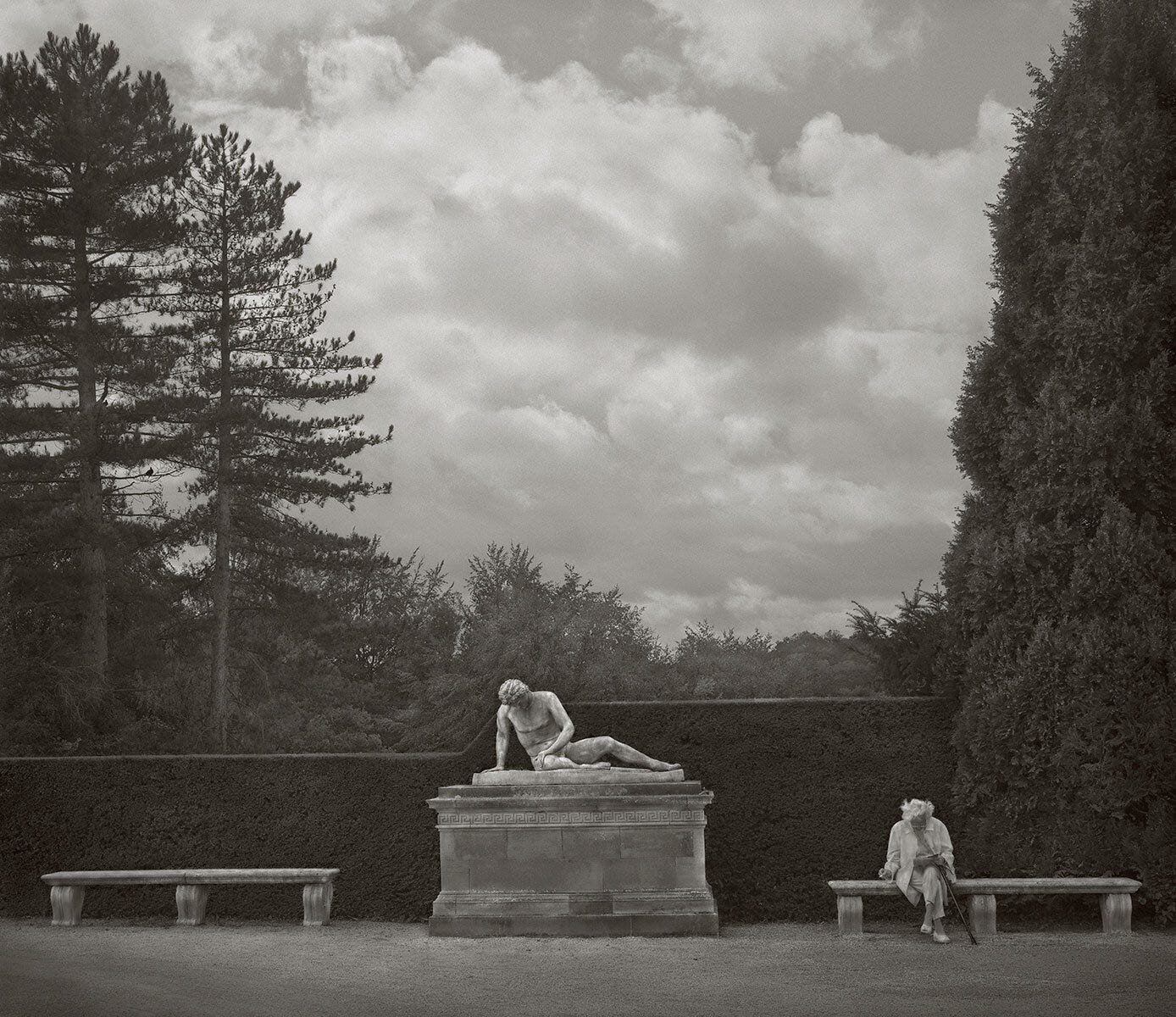
© Beth Dow, Benches Blenheim Palace
The fact that her series of photographs ‘In the Garden’ is printed in platinum- palladium, ‘speaks’ to this other-worldliness. Juxtaposing static ‘dead’ artefacts, statues or rocks, with dynamic ‘live’ plants reminds me of Edwin Smith
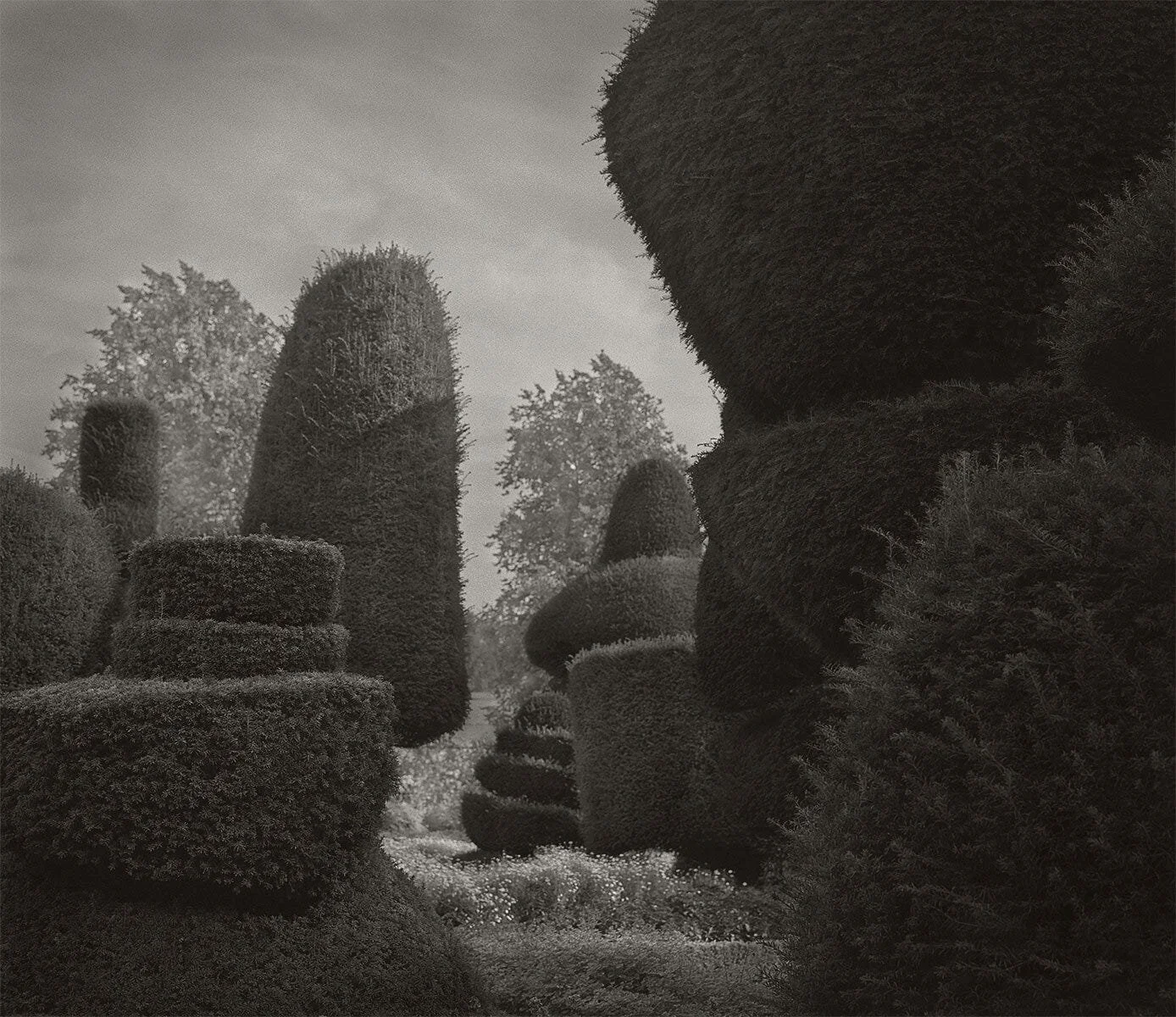
© Beth Dow, Passage, Levens Hall
When on my own travels with camera, I frequently look to ‘sit down to rest … in some shady place’ (Amoretti, Sonnet 67, Edmund Spenser). Often graveyards provide excellent places not only for eternal rest, but temporary respite.
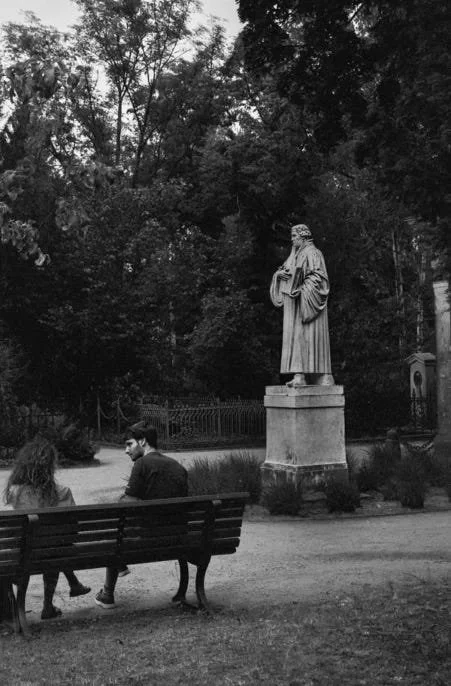
© Tony Cearns, Ilford HP5+ film, Berlin 2023
Gardens, being not only physical but conceptual entities, are complex places. They draw out social and historical propositions and associations. Paul Strand, the celebrated photographer, is said to have undergone a ‘metaphysical turn’ in his final months at his garden at Orgeval .
Something similar beckons as I sit in a Berlin park and look across lawns, flower-beds and ornamental sculptures in a certain way, exemplified perhaps by how statues gaze Atget-like across parks.
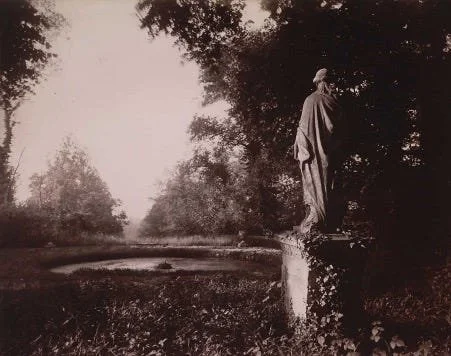
© Atget, Parc de Sceaux
Gardens and parks are complex entities. But what does this mean? David Cooper in ‘A Philosophy of Gardens’, concludes that the garden is an ‘epiphany of the relation between the sources of the world and us’.
For me there has been no epiphany, no Sartori moment, no sudden awakening. Realisation has been gradual and wayward. More like Kenshō, perhaps.
