The Flanks of Moel Siabod
I have been visiting the forested flanks of Moel Siabod in North Wales since 1982, when I first competed in an orienteering competition there. Today (2026) I enjoy photographing the green carpet of the forest.
The forest was planted by the Forestry Commission before the Second World War as part of its re-forestation agenda for the Gwydyr Forest, a very extensive area across North Wales. The Siabod area on the Capel Curig side was a bit of an outlier to this. The Commission worked with the idea that the introduction of Sitka Spruce, the principal species of the wider forest, Norwegian Spruce, European Larch, Red Cedar and Western Hemlock, all non-native species, would lead to a thriving forested bounty. There seemed to be little understanding back in the 1930’s – 1940’s that any monoculture would have the opposite effect.
However, over the 44 or so years that I have been visiting, the forest has started to diversify. The conifers have not been harvested and replaced for their wood, and many trees have succumbed to the winter storms. The area is fenced off, protecting it from grazing by sheep, but not by deer and rabbits. Gaps have appeared between trees, clearings have opened up the ground to light, and slowly other species of tree have found toeholds. Some Oak, Ash, Birch, Hazel, Holly.
Although a far cry from what would have been the original and abundant Temperate (Celtic) Rain Forest, before its clearance for sheep, there is increasingly more to see of mosses, liverworts, algae and slime moulds. And with the recolonisation by Ash with its alkali bark, more lichen species are being supported.
Below are the photographs that I took in March 2026. I am always overtaken by the Greens in this forest.
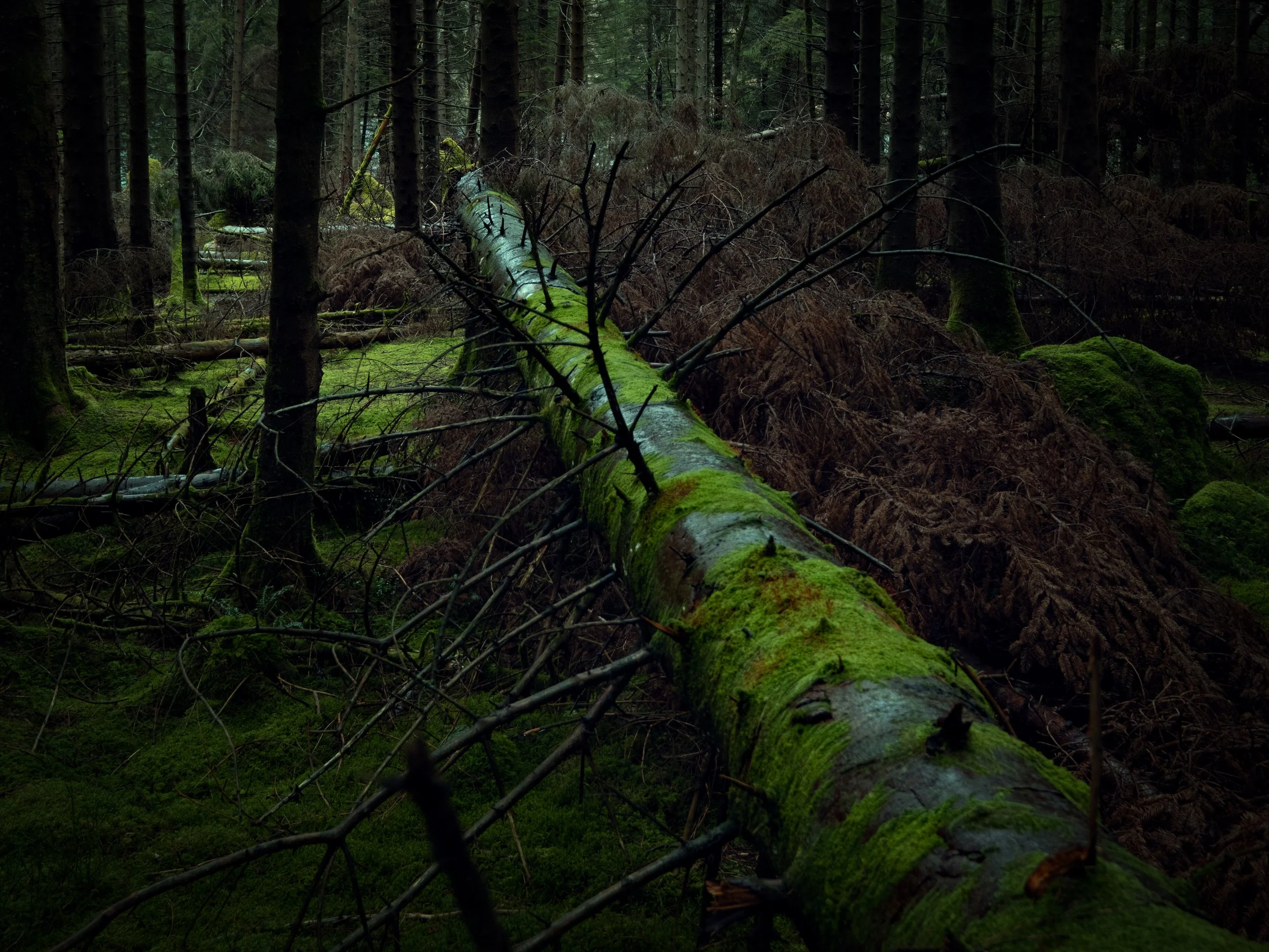
Storm damage
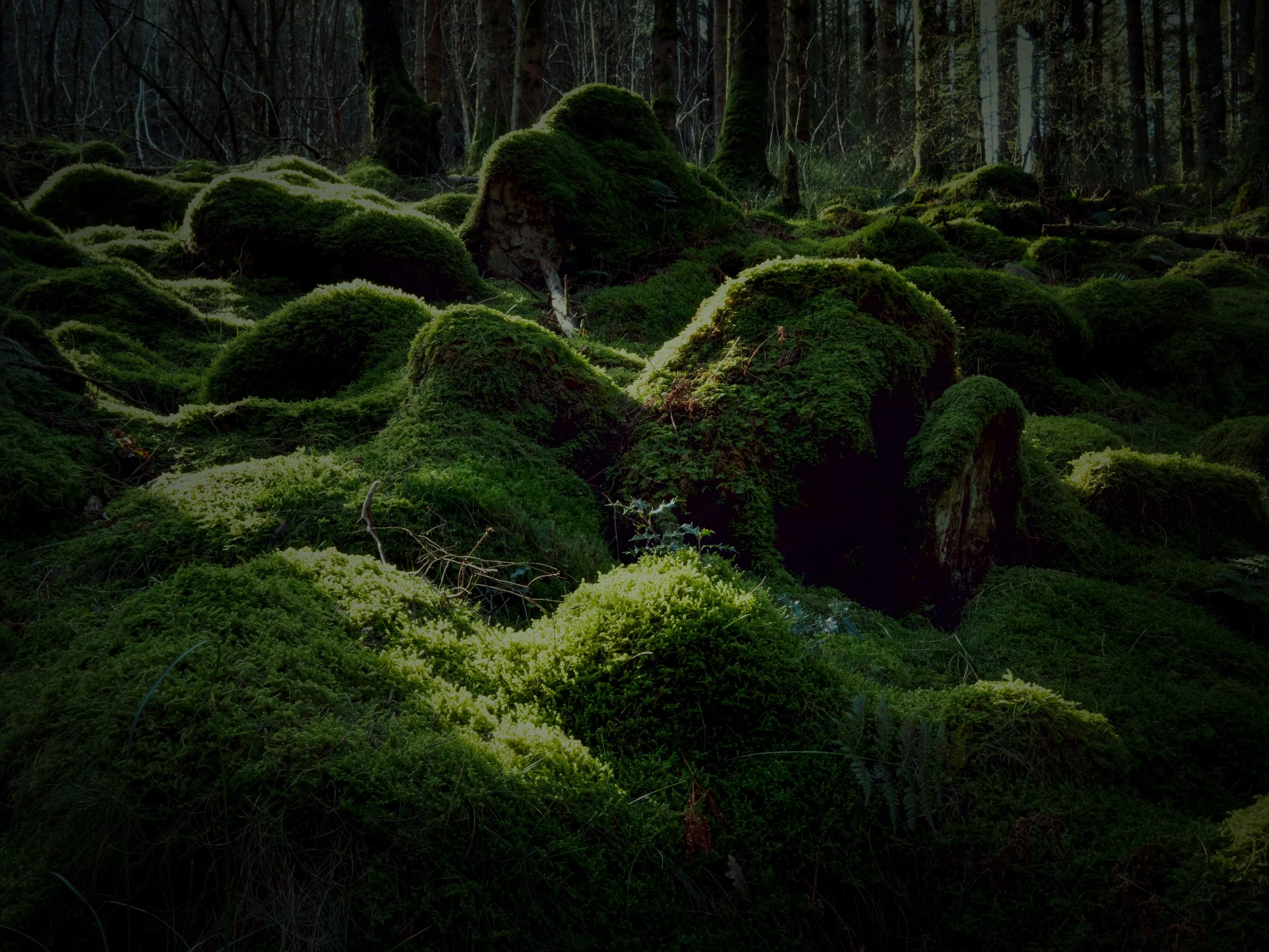
Moss covered logs
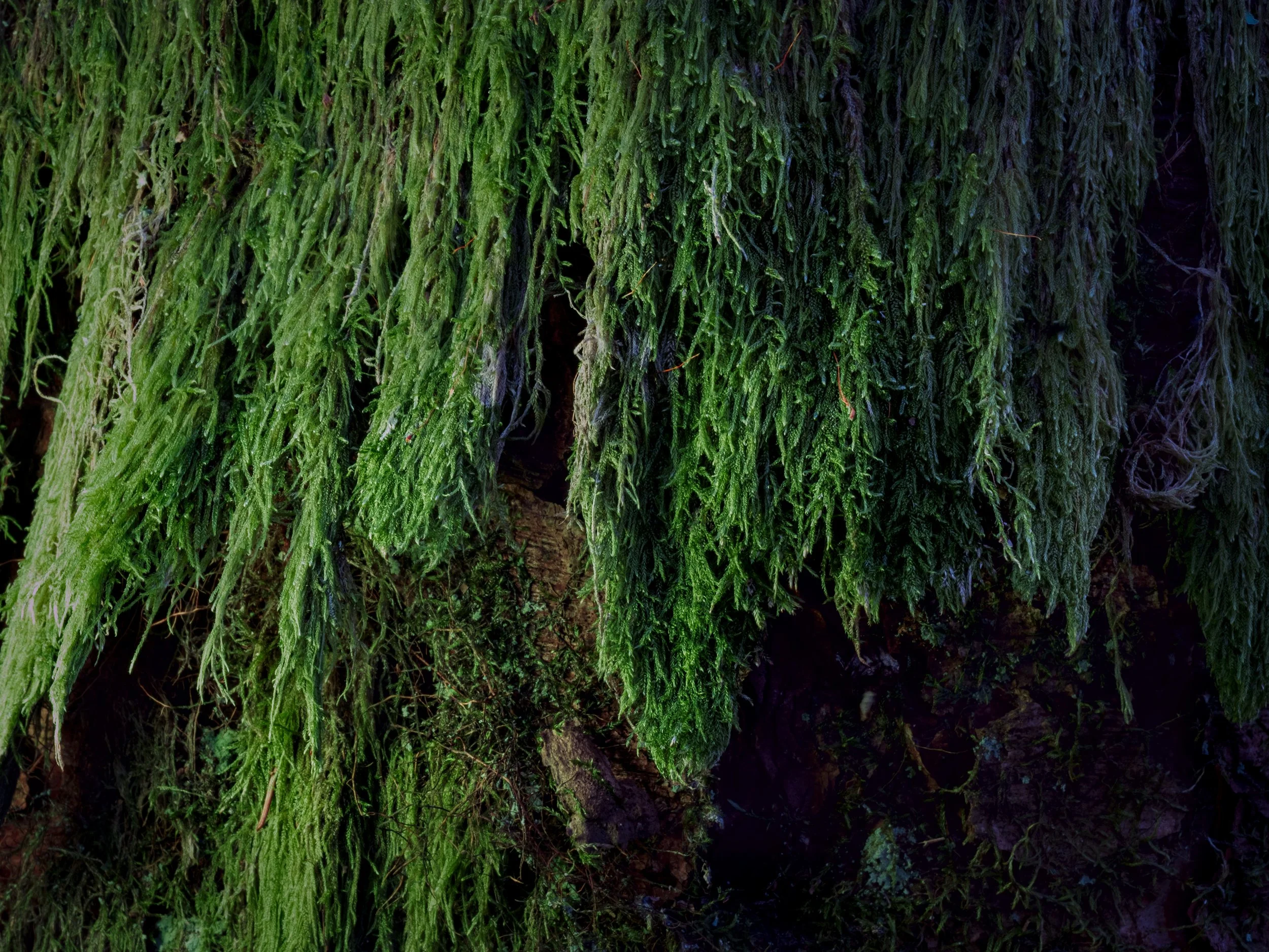
Hanging moss
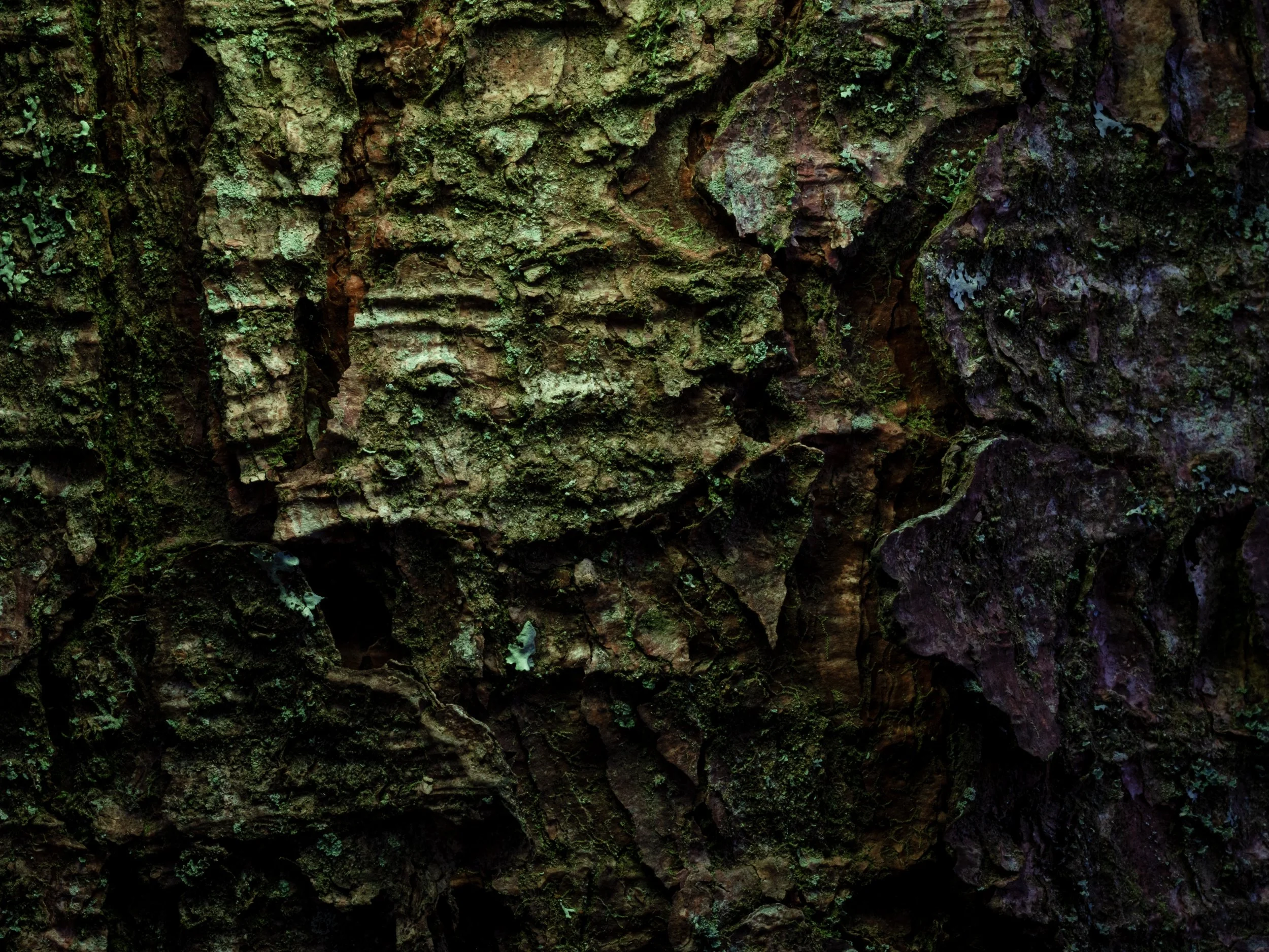
Bark
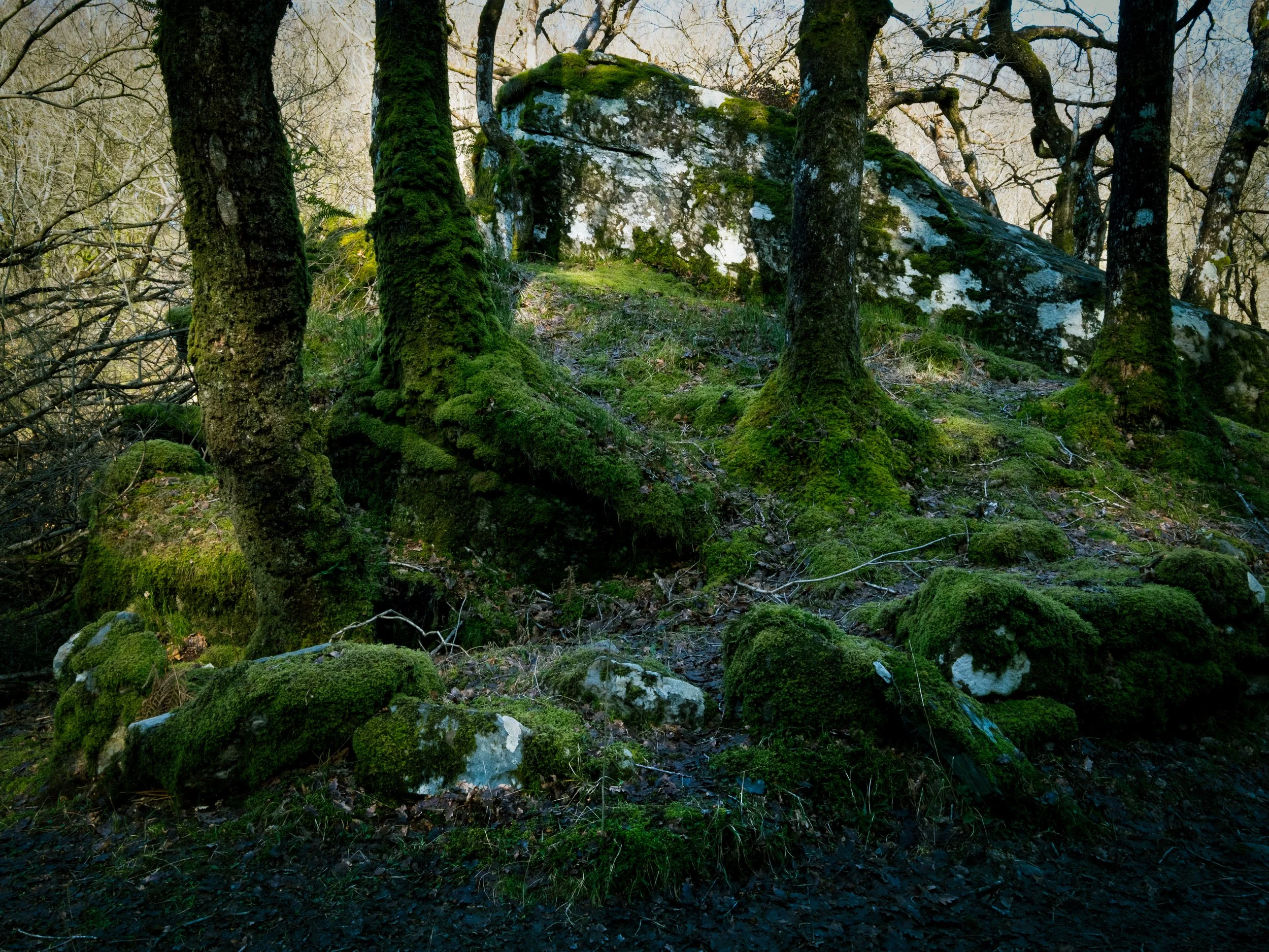
An Oak stand
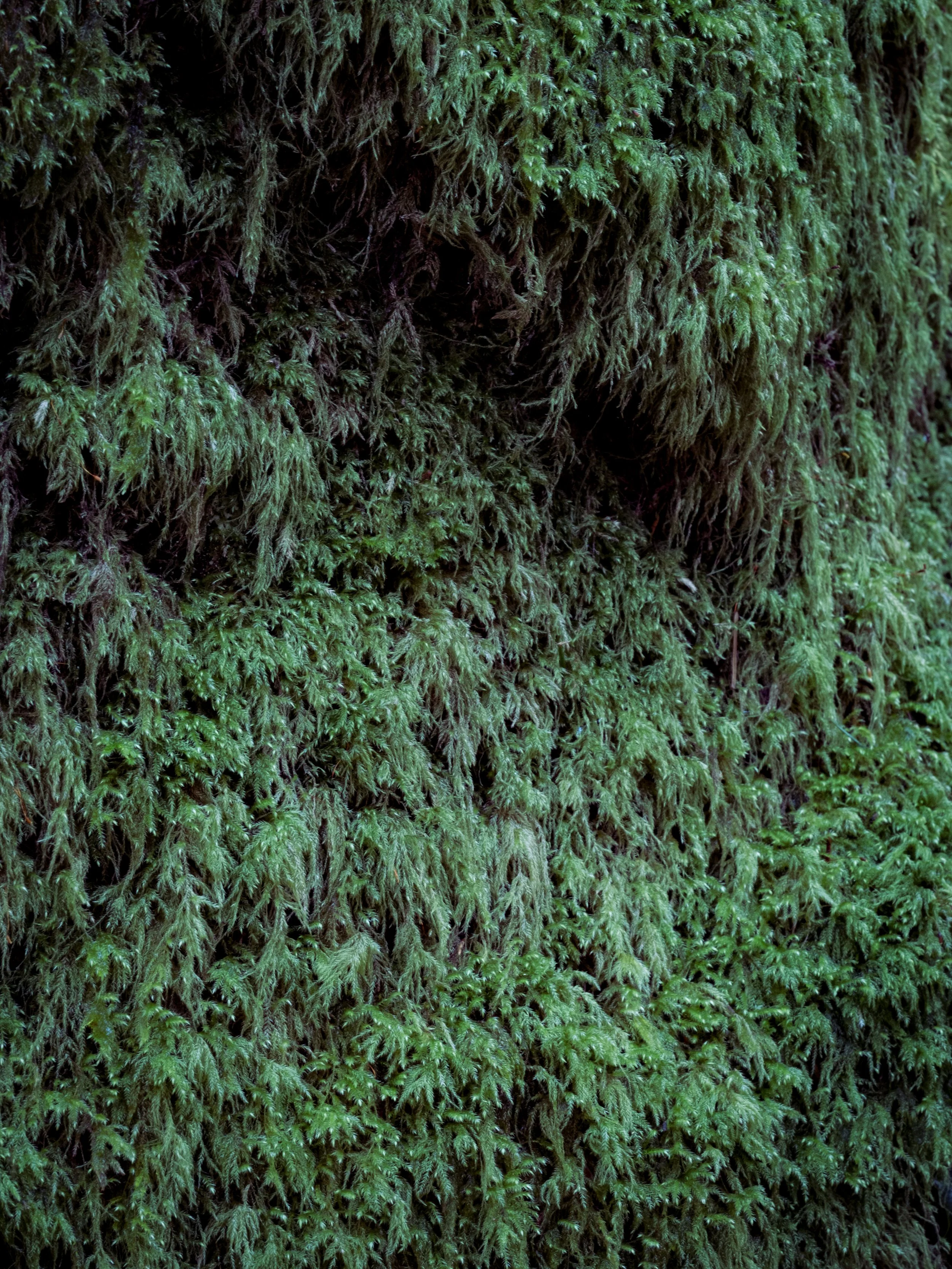
Moss bank
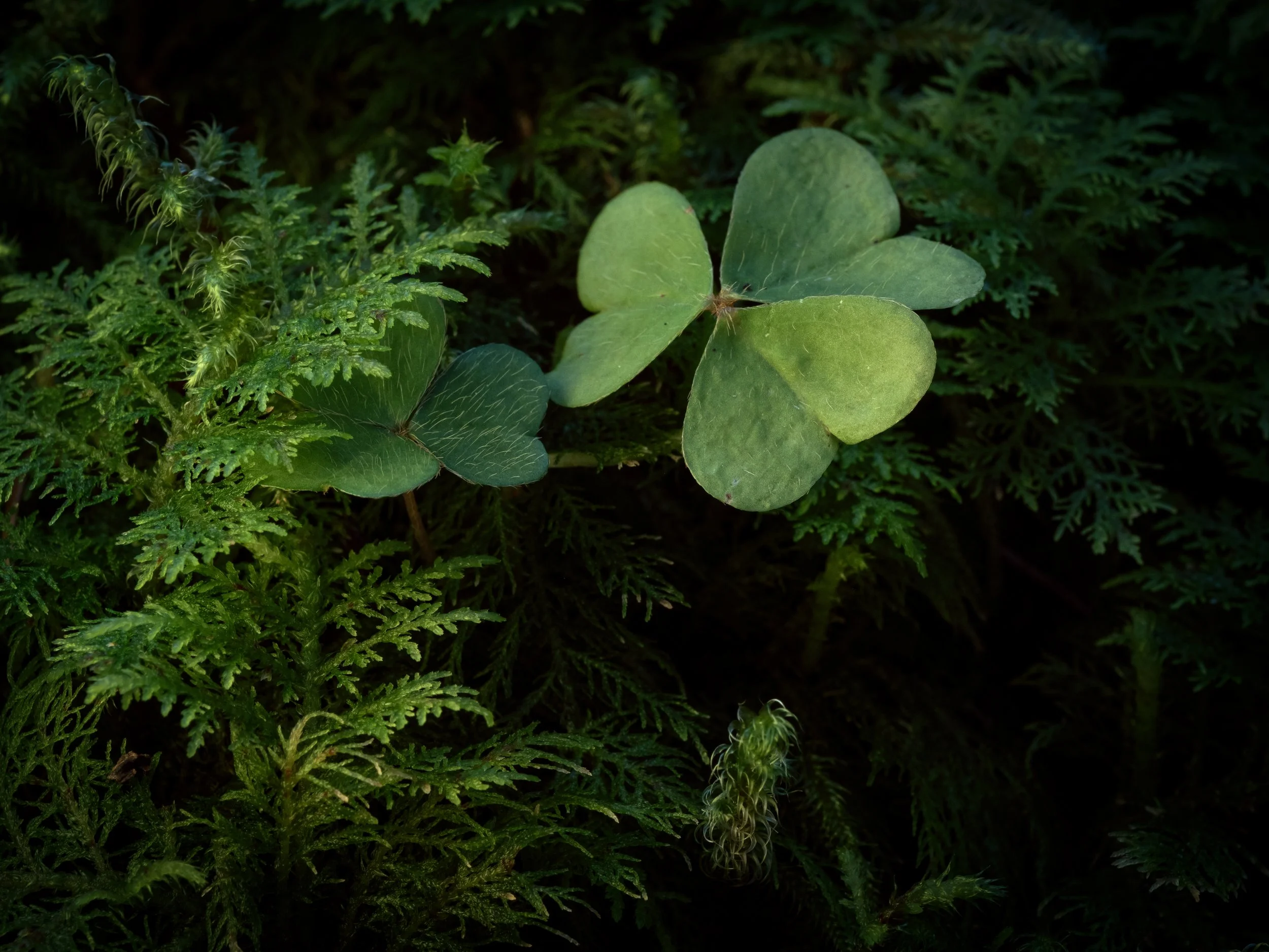
One of the Wood Sorrels
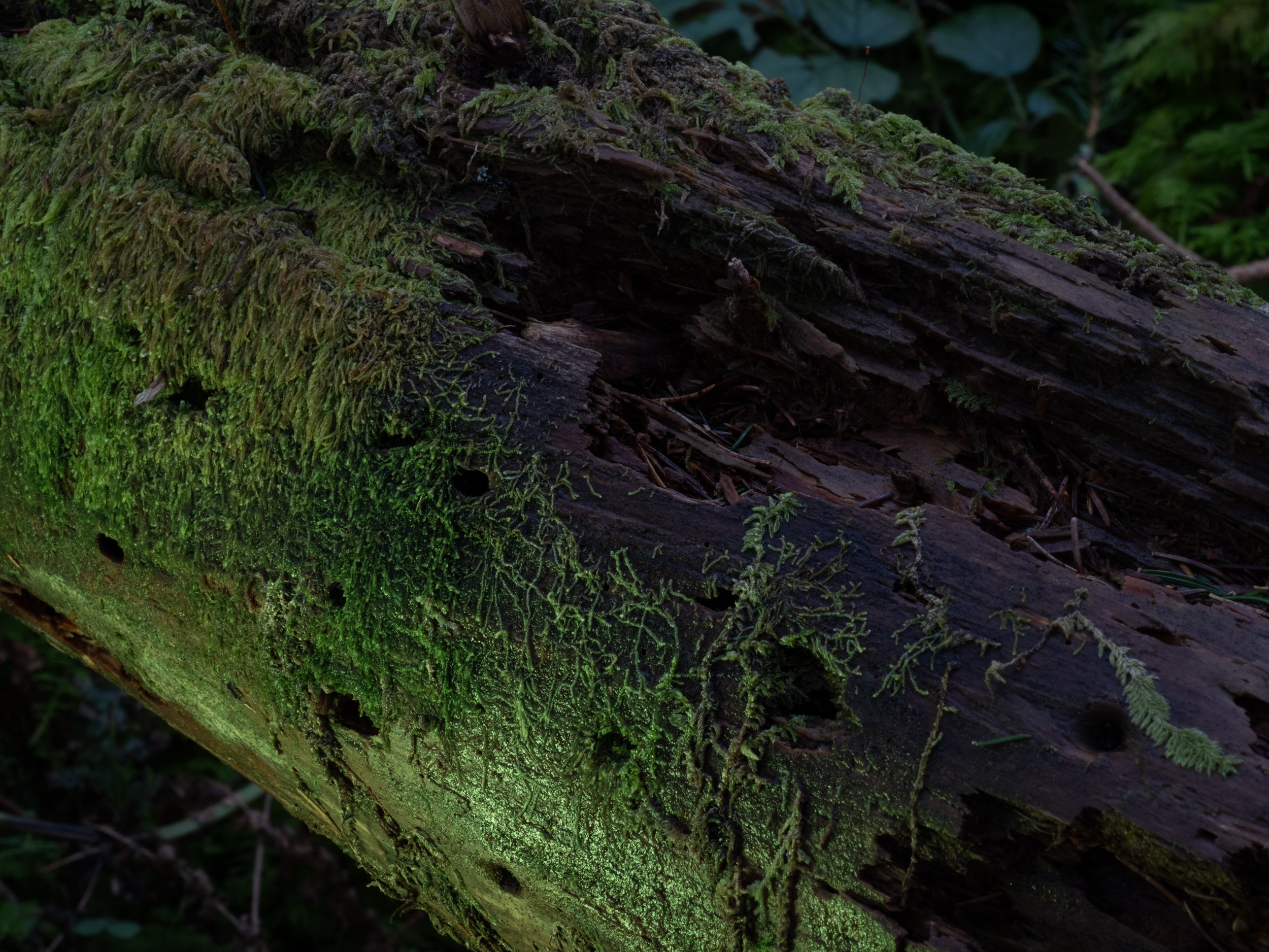
Decay and recycling
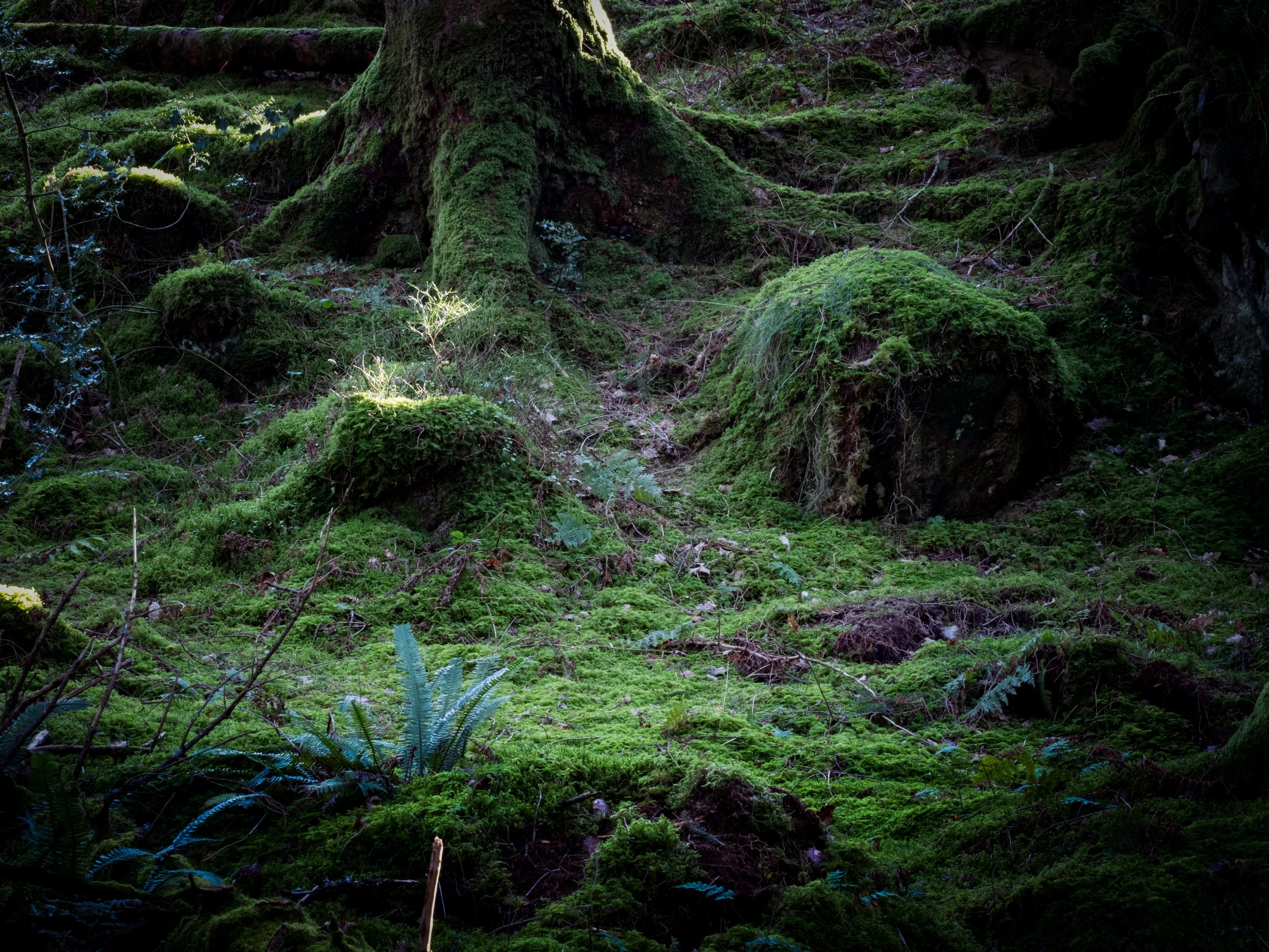
Roots
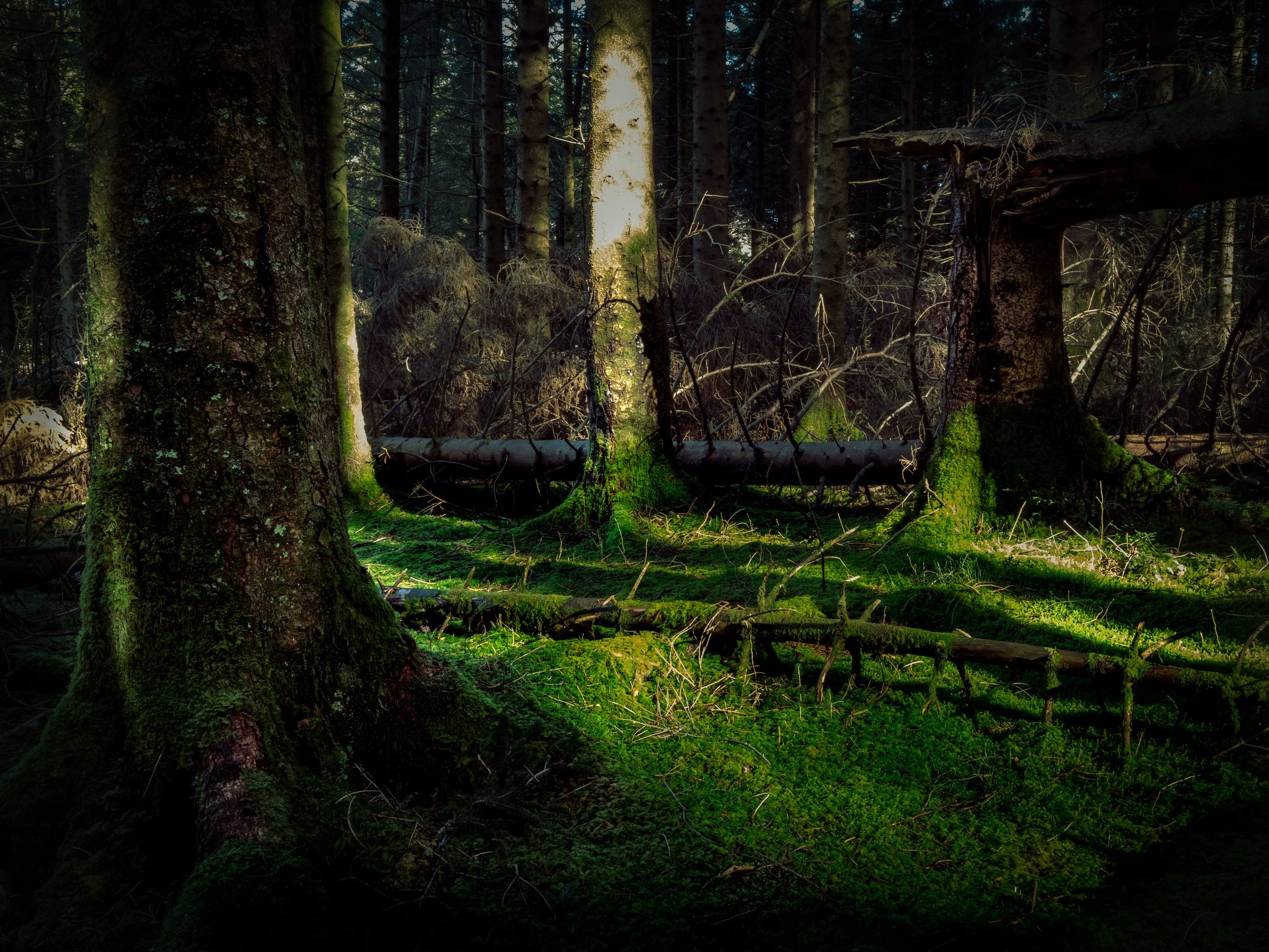
A small clearing after a storm
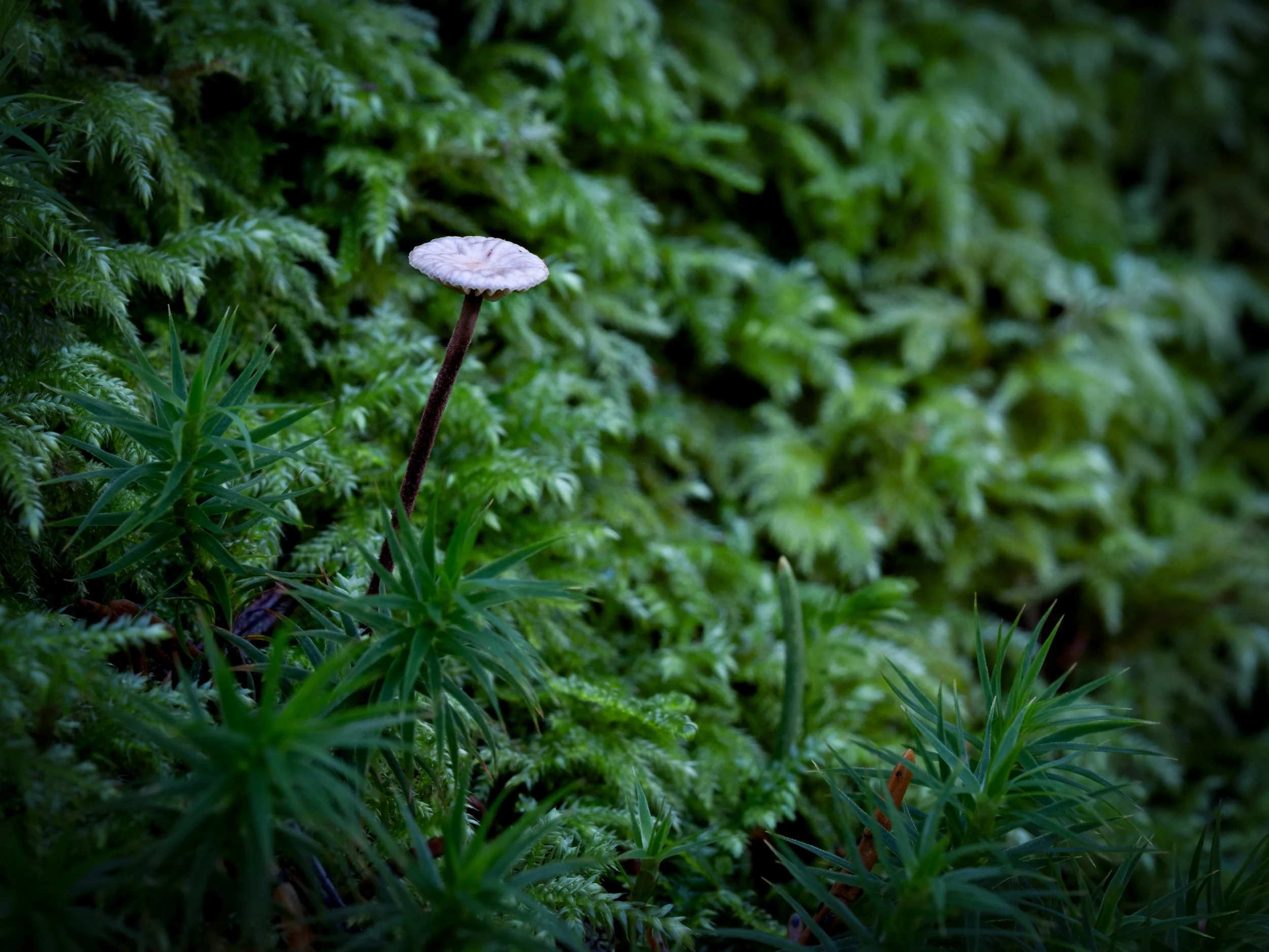
Fruiting body
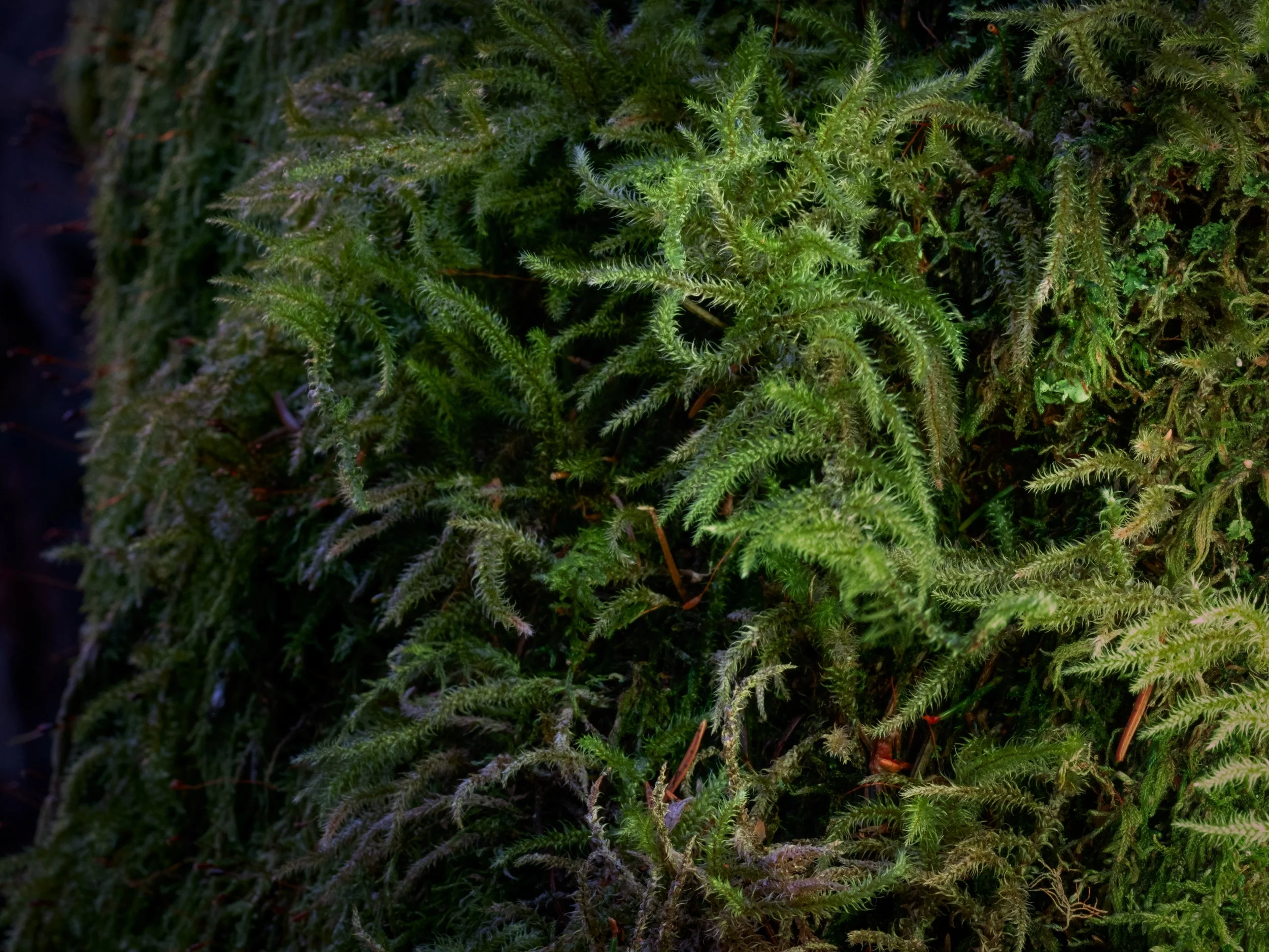
Filaments
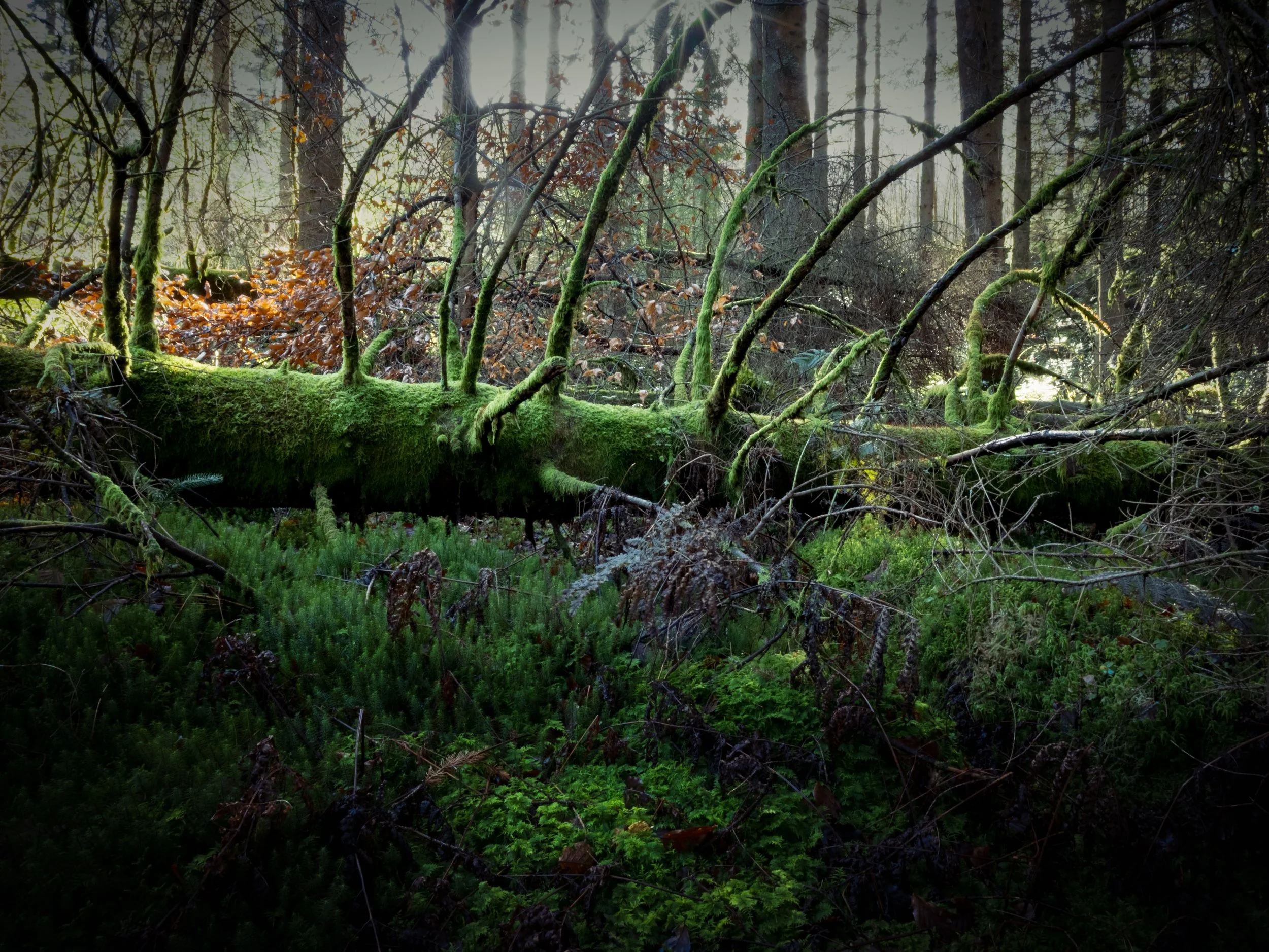
Resting place
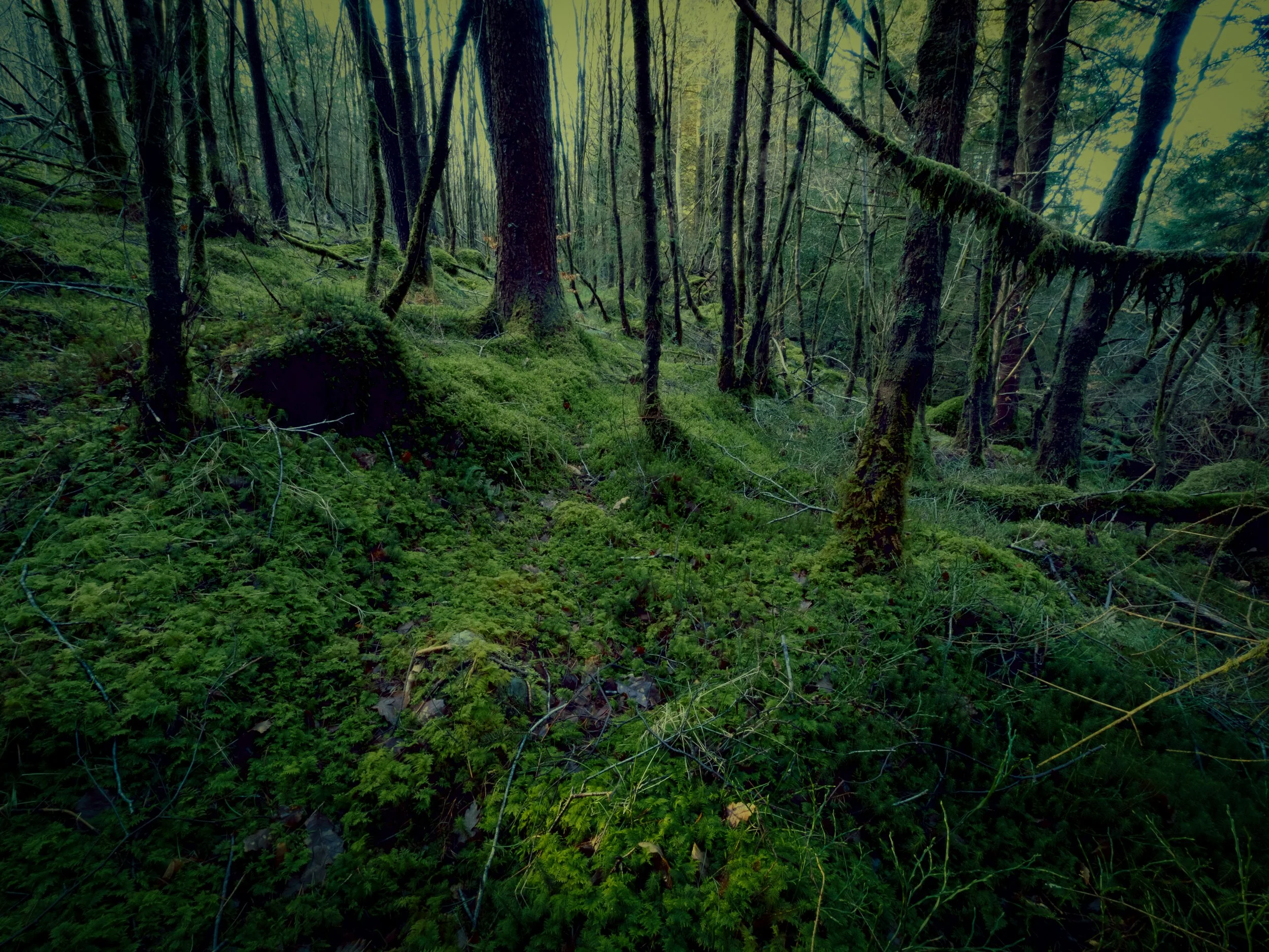
All engulfing
