Making bread
I have always been fascinated with bread-making.
I think this comes from an early age when my mother used to despatch me to buy our daily bread from around the corner from where we lived in 1950’s Niteroi, Brazil. The neighbourhood padaria doubled up as a café, a place for adults, mainly men, to observe and quietly complain about how things were.
I remember the smell of the still warm bread wrapped in brown paper as I hurried home, trying not to eat some. The bread was Pão Francês, not very healthy but cheap and ubiquitous across Brazil. The smell of baking bread is one of life’s delights.
In the years that followed, as a young man, I tried to bake bread, but was never successful. A busy high pressure career, often travelling away from home, and the natural rhythm of bread-making don’t fit together. In 2011 I retired from my career and I decided to learn about bread-making, amongst a few other things. I booked on a bread-making course run by Andrew Whitley.
Andrew had started the Village Bakery at Melmerby in Cumberland, as it was known then, at a time when it was difficult to even buy a wholemeal loaf. He co-founded the Real Bread Campaign, and wrote Bread Matters (2006), a polemical as much as practical book attacking the Chorleywood Process and industrial bread. He is credited with changing the way Britain thinks about bread (BBC Food & Farming Awards) and was a leading light in the artisan baking revival movement.
By the time I met him, he had stopped baking at Melmerby and had bought a farmhouse in the Scottish Borders where he ran courses and wrote and lectured about bread. At that time he was beginning to grow his own organic cereal crops so that he could control the whole process (‘Soil to Slice’) and to this day he is still doing that (Scotland the Bread).
I count myself very fortunate to have learned about bread from Andrew, even though it was only for a short time. It wasn’t simply about technique. It was more about his total immersion into great bread as a way of life, something we discussed at length over the wonderful meals that Veronica Burke, his wife, prepared. That course changed things for me. Andrew showed me what bread could be.
I see from my notes that over the two-day course we made Pain de Campagne with wheat leaven, Wholemeal bread, Croissants, Borodinsky, Ciabatta and Spicy Buns. I still use the recipes and techniques from that course today but it was his method of using naturally grown yeast instead of commercially grown yeast (or in addition to commercial yeast) that made a lasting impression on me. I add naturally home grown yeast to all my bread now.
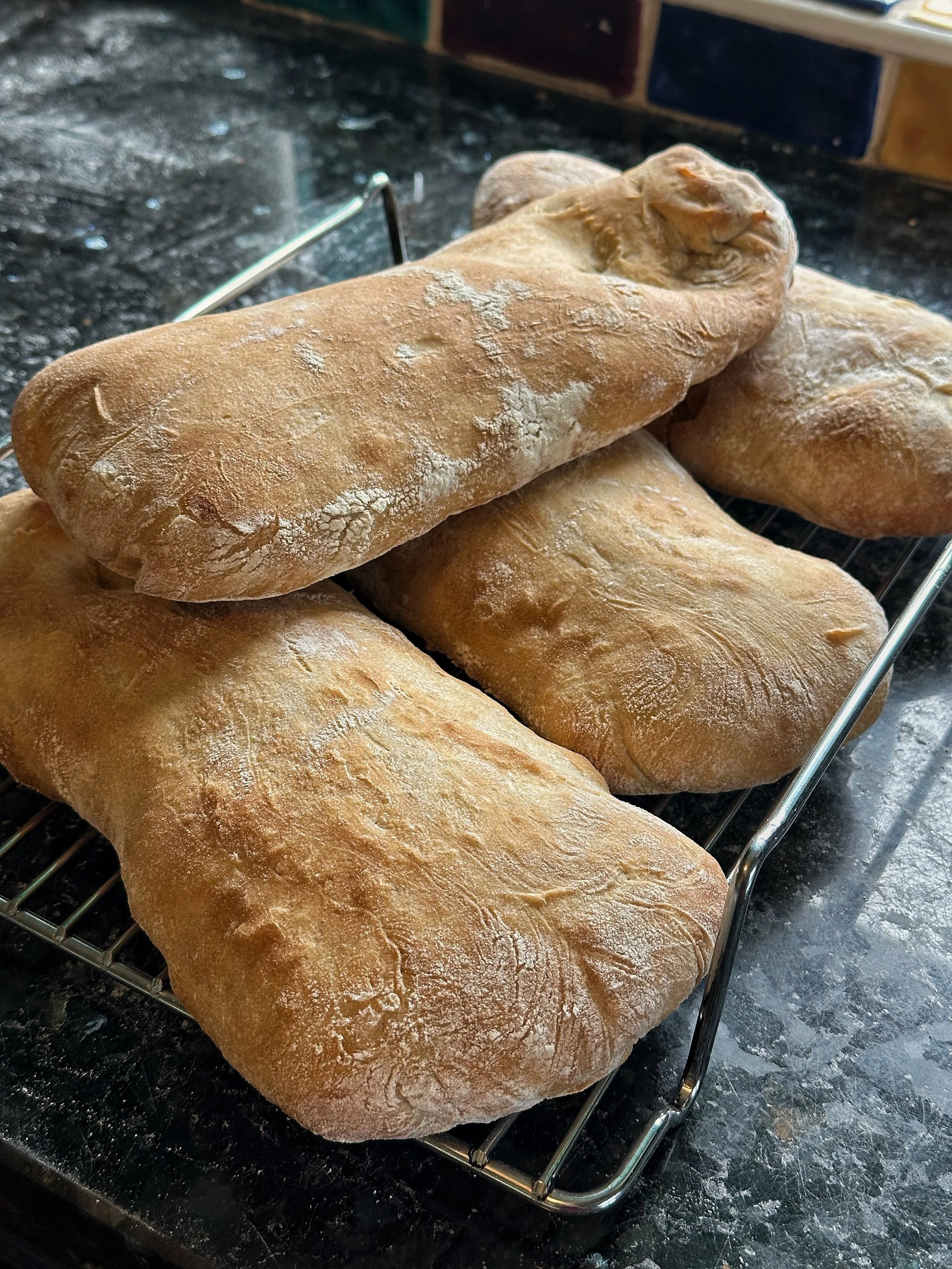
© Tony Cearns 2026 Ciabatta
Today we often use the term ‘sourdough’ as a label for certain types of bread but actually the term refers to a leavening method using locally cultivated yeast cultures (‘starters’). There are many different styles of bread made with ‘wild’ yeast so I prefer to use the term ‘naturally leavened’ bread rather than sourdough, but sourdough is the term most people use for the bread, so the term ‘sourdough’ is what I also use.
Since 2011, I have learnt through studying the methods of many artisanal bakers too numerous to mention individually. But I give special mention to Steve Sullivan, Nancy Silverton, Jeffrey Hamelman, Ken Forkish, Richard Bertinet, Lionel Poilane, Daniel Leader, Chad Robertson and more recently Maurizio Leo.
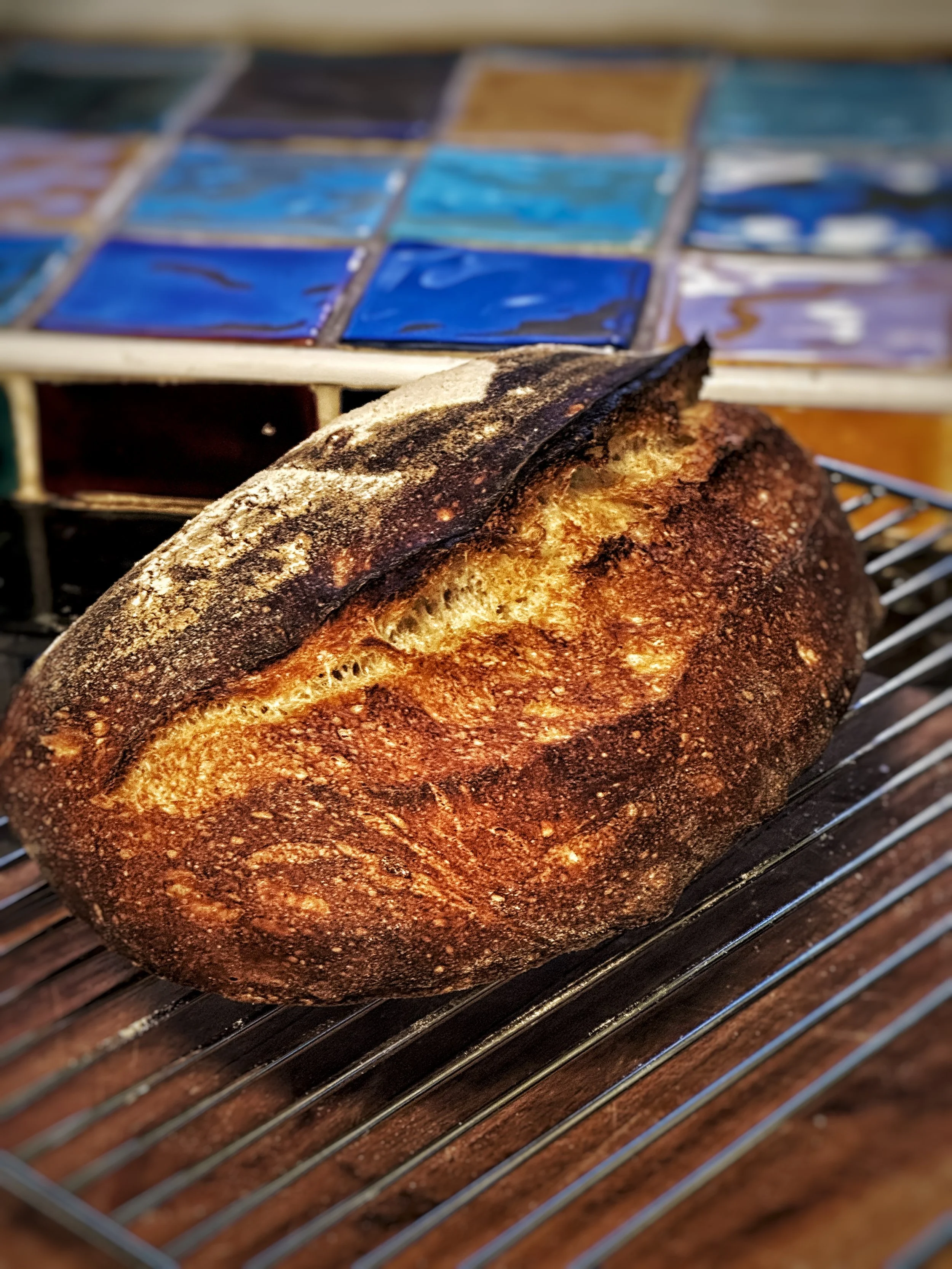
© Tony Cearns 2026 - White and Rye based natural starter for a Sourdough made with part Organic White and part Rye.
There is no shortage of artisanal bakers from the 1970s and 1980s who lay claim to re-introducing natural bread. California, particularly San Francisco, is often cited as the birthplace of this movement but, as Chad Robertson says in his book ‘Tartine Bread’, that burnished, blistered, open-crumbed banneton or boule (that I currently favour) is a descendant of the French Pain de Campagne, that rustic, naturally leavened country loaf that has been baked in French communal ovens for centuries. And Pain de Campagne was one of the breads that I learnt at Andrew’s course, which finds a great example in his Cromarty Cob, a bread that I have baked many times over the years.
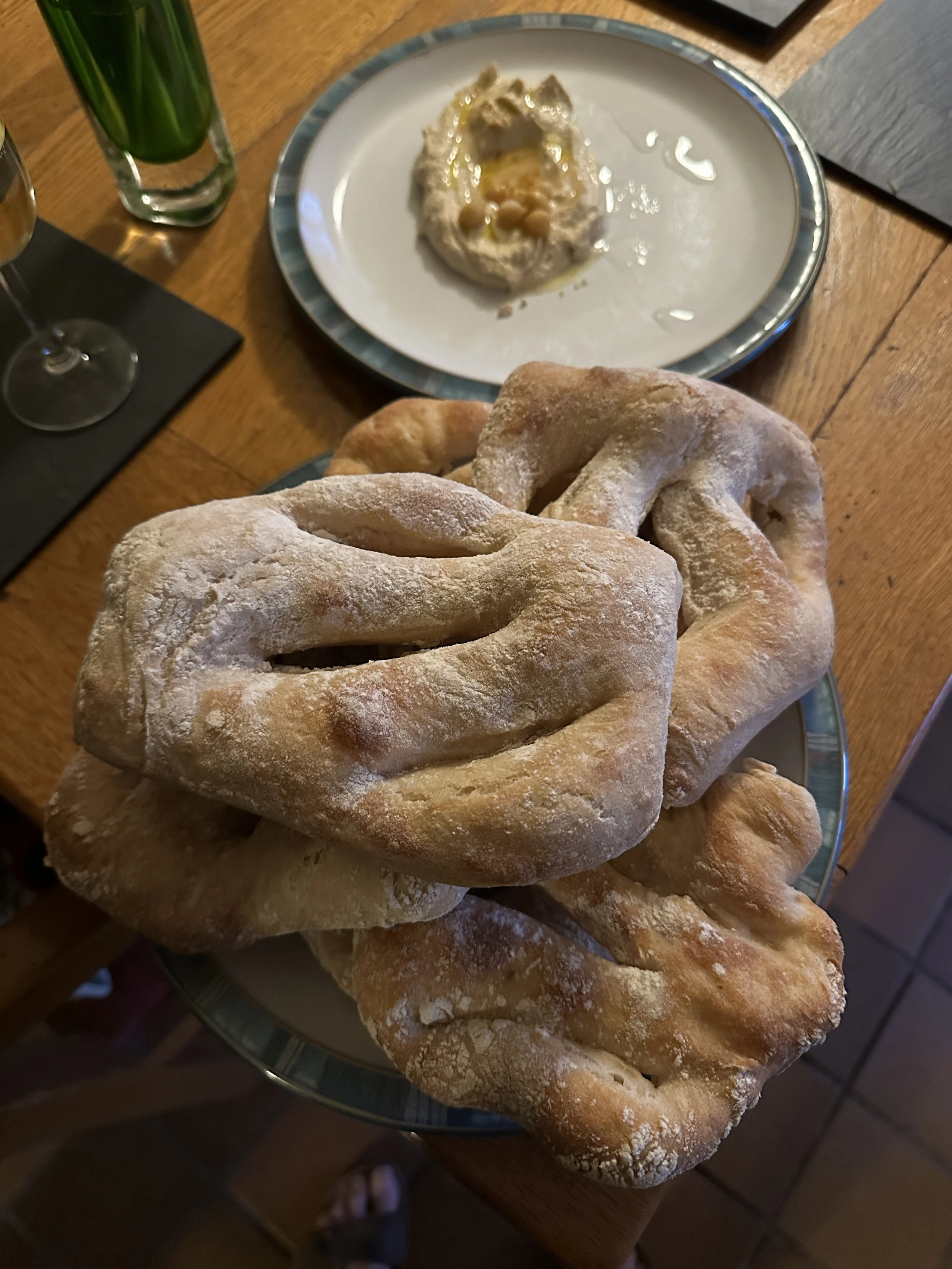
© Tony Cearns 2025 Simple Fougasse with home-made Hummus, a simple lunch.
What is it that draws me to sourdough? Well, apart from the great chewy slightly sour taste of the crumb and the crispy but forgiving nature of the crust and the more wholesome nutrition it provides, I offer the following:
Firstly there’s the element of ritual and rhythm in making it. I am largely confined to my home as a result of being a full-time carer for my wife. The business of keeping a sourdough starter near peak condition, the steps that build structure and taste into the dough, the physical effort of kneading and shaping, the timing of the bake in relation to the rise - all of these help me to acknowledge a cycle that is bigger than myself, but one that I can fit into. In a way, I feel that I’m just a conduit for something much bigger than me.
Secondly, attention to detail is the most important attribute required of a good home baker. Keeping in touch with the starter, its smell, look and texture; the feel of the dough as it develops through its various stages; the hollow sound of the crust as the nearly-ready loaf is tapped - the many touch points during the 3 days required to make a loaf from scratch. It’s only through being attentive to the dough and yourself that you can make progress.
Finally, each loaf is different because there are so many variables in play. I think that this can make it difficult for beginners and that’s why many give up. It isn’t as simple as just following a recipe. Each bag of flour is different. Ovens vary. Kneading methods are particular to a baker. The yeast and bacterial population of each starter will differ. And so on. That is why attention to detail is important. One needs to be able to fit the making of a loaf into the particular conditions of one’s own kitchen and that can only be done by being able to assess the quality of a starter or dough at each stage and to adapt one’s methods to match. Being attentive like being in a dance.
What I am alluding to here is the idea that home bread-making connects me. I may be isolated from society through the responsibilities of being a care-giver, but that isolation is tempered through the conversations I have with the flour millers that I buy from, the organic cereal farmers with whom I engage, other home bakers, the natural biological process of fermentation, and of course, my own attentiveness in how I try to live.
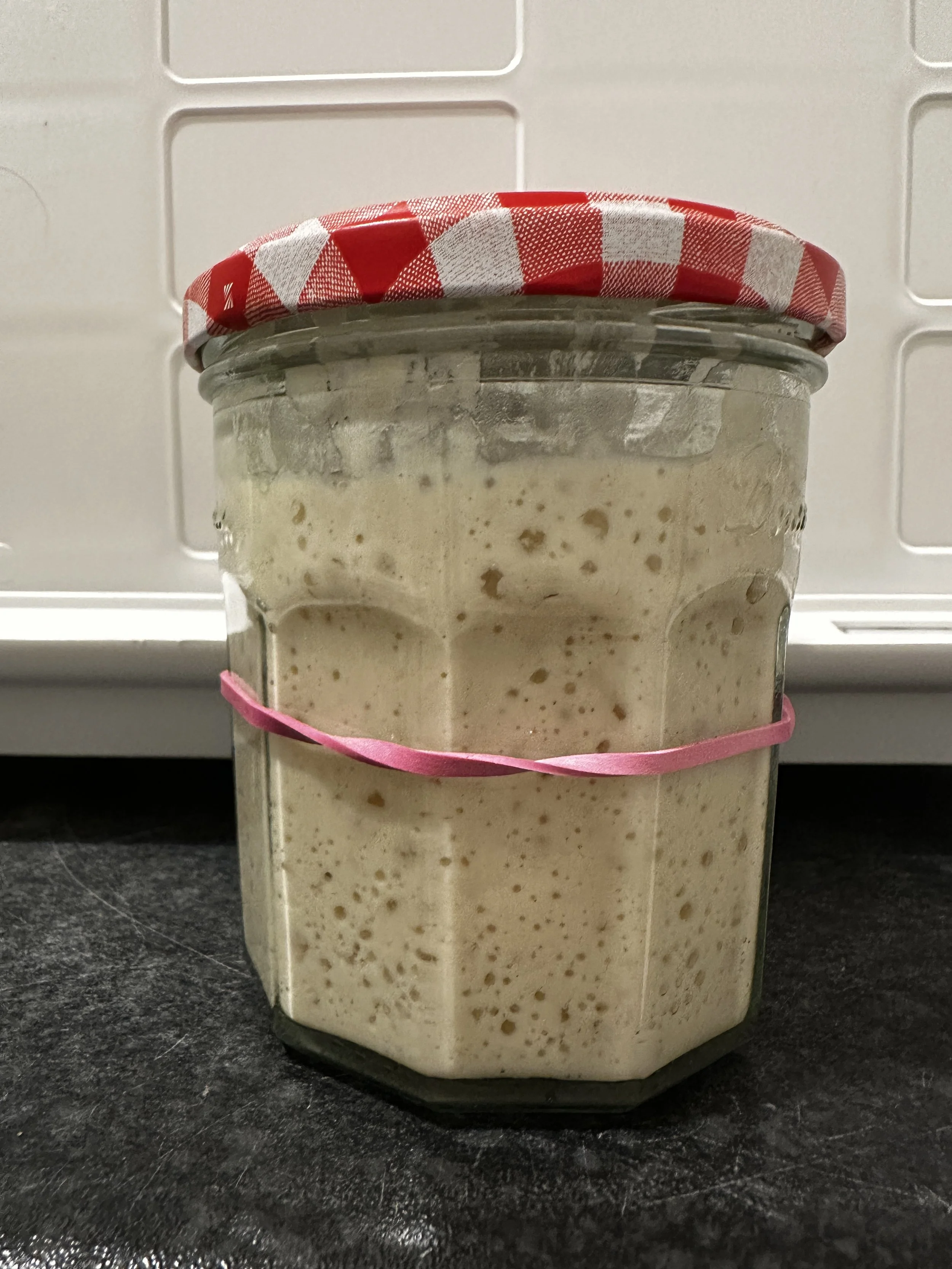
My starter nearing peak condition
Let me say a few final things.
I make bread in the way that I do because it gives me vitality through arranging me as part of a natural process, it nourishes me with organically grown local ingredients (as local as I can make it) and it satisfies me because I believe that I am doing ‘good’ in terms of a more sustainable way of living.
But the ‘proof’ is in the pudding bread, so to speak.
As a young child I ate bread with every meal. The ‘staff of life’. Then for many years I only occasionally ate bread, mainly office sandwiches or toast with my English breakfast. Supermarket bread just didn’t add to anything. Now bread is once again a staple, whether it’s a sourdough chewy loaf to eat with soup or cheese with pickles, an unleavened but sour Roti to accompany my Indian Dhal, or a crusty blistered sourdough base for my favourite pizza: Neapolitan-style pizza with its thin centre and thick puffed edge (‘the cornicione’). The art of sourdough Neapolitan-style pizza is a whole other thing. Too much for now.
Many thanks for reading.
