Broad Beans
For most of my life I’ve not been a fan of broad beans. I have memories of a dry and rather bitter vegetable, often with tough skins.
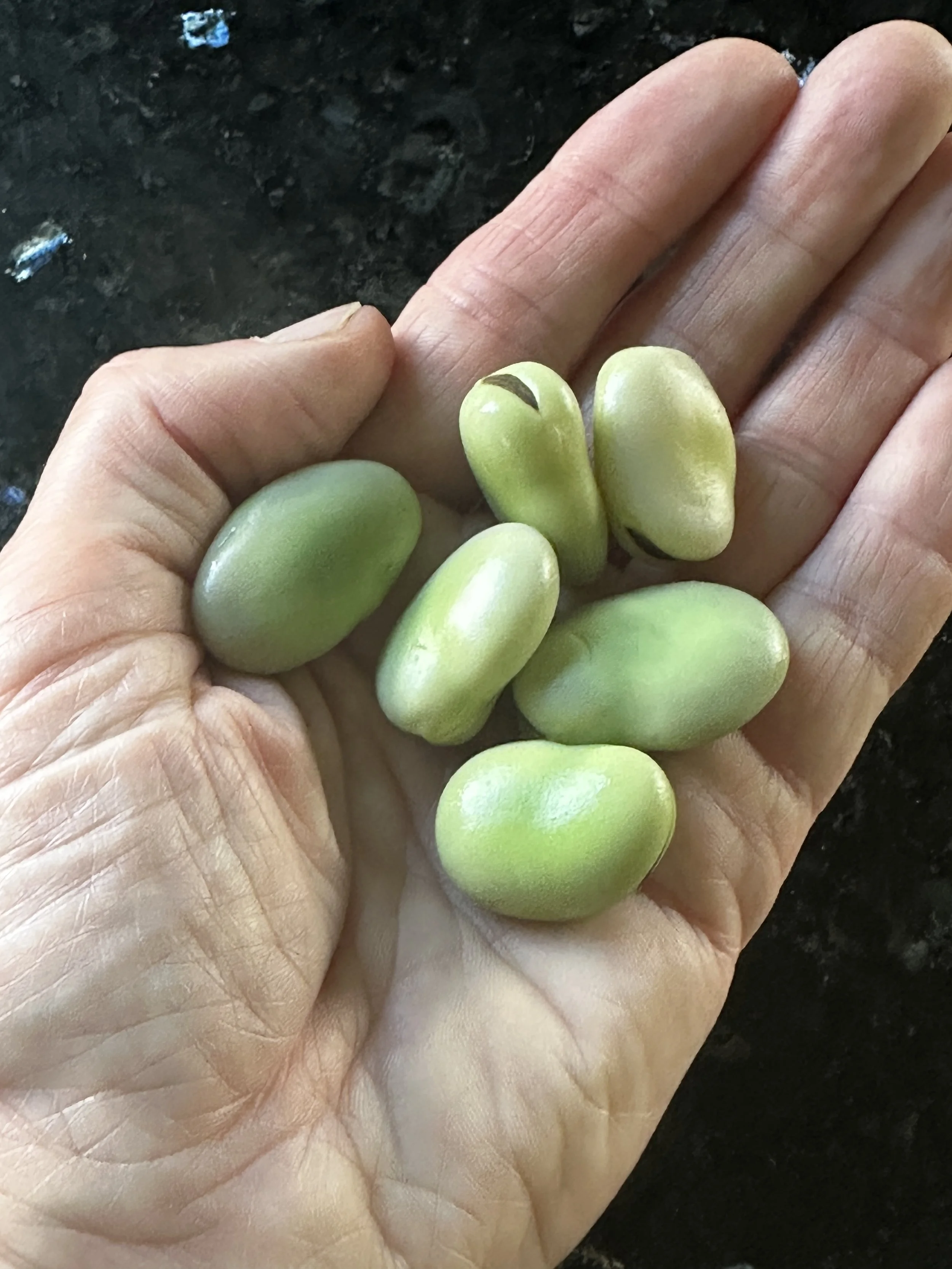
Broad beans form my garden
It’s a pity. Broad beans are an excellent food — high in plant protein, fibre, folate, and phytonutrients, low in fat and sugar, and with an antioxidant profile that stands out even within the legume family.
I had read that fresh broad beans straight from one’s own garden taste much better than fresh shop-bought ones, which are several weeks old by the time they reach your plate. So this year I have grown some.
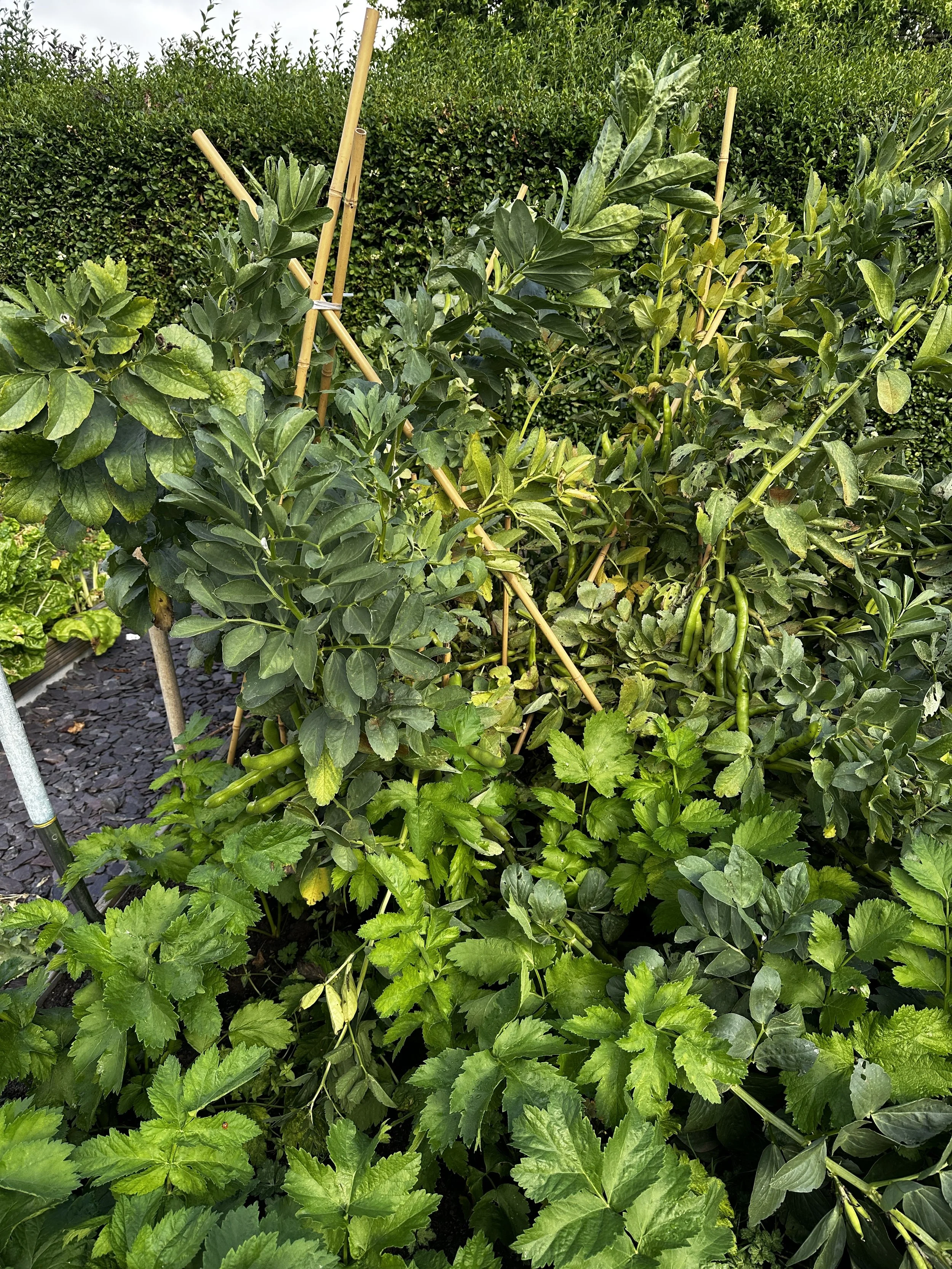
Broad beans, behind the parsnips
They didn’t disappoint. A month ago, whilst the beans were still young and the pods tender, I ate them whole, cooked in a little butter, or steamed.
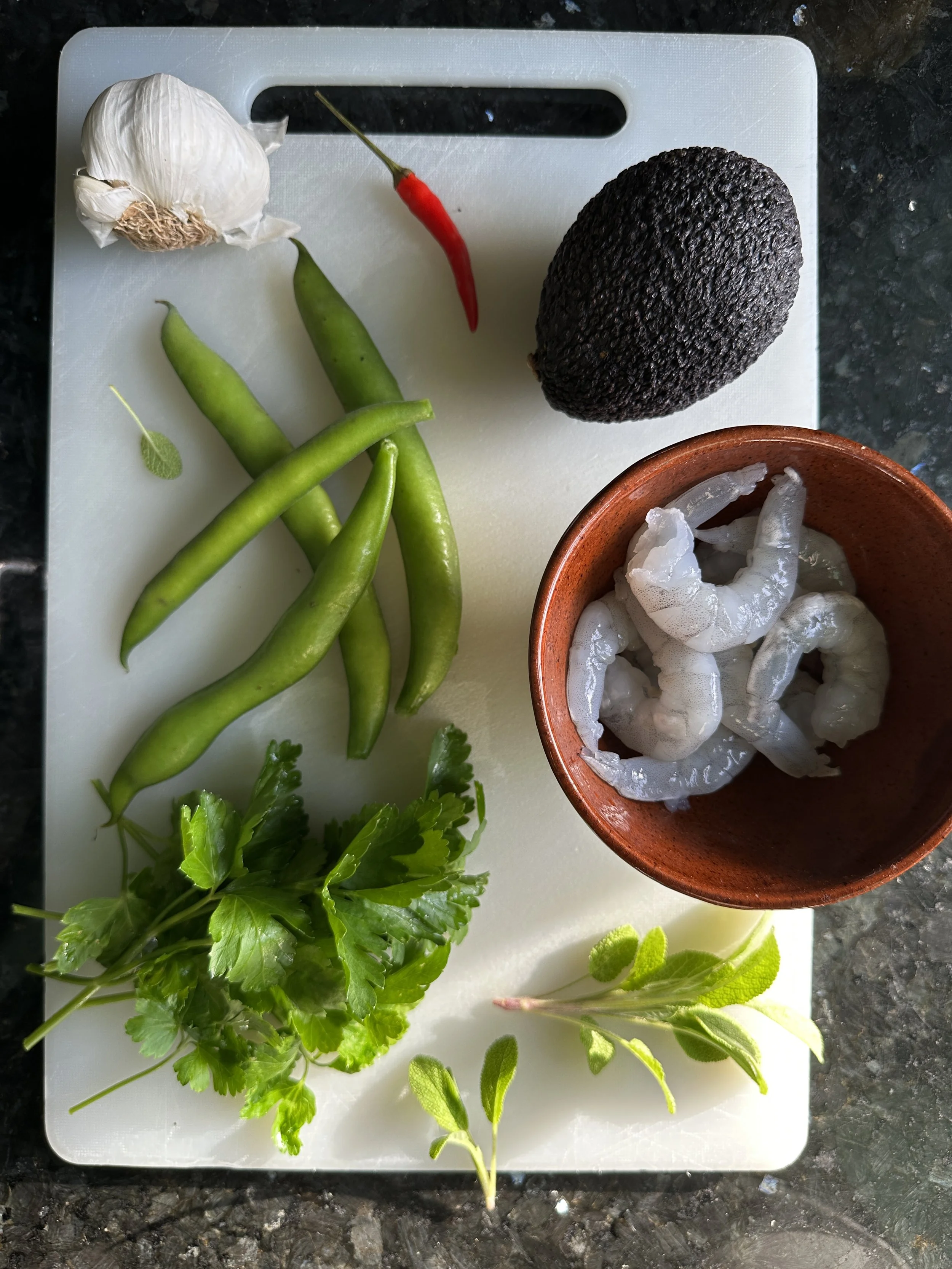
Young beans eaten in their pods.
Today, as the pods are getting tougher and as I need to turnover the space for a new vegetable, I decided to harvest and freeze the remaining crop.
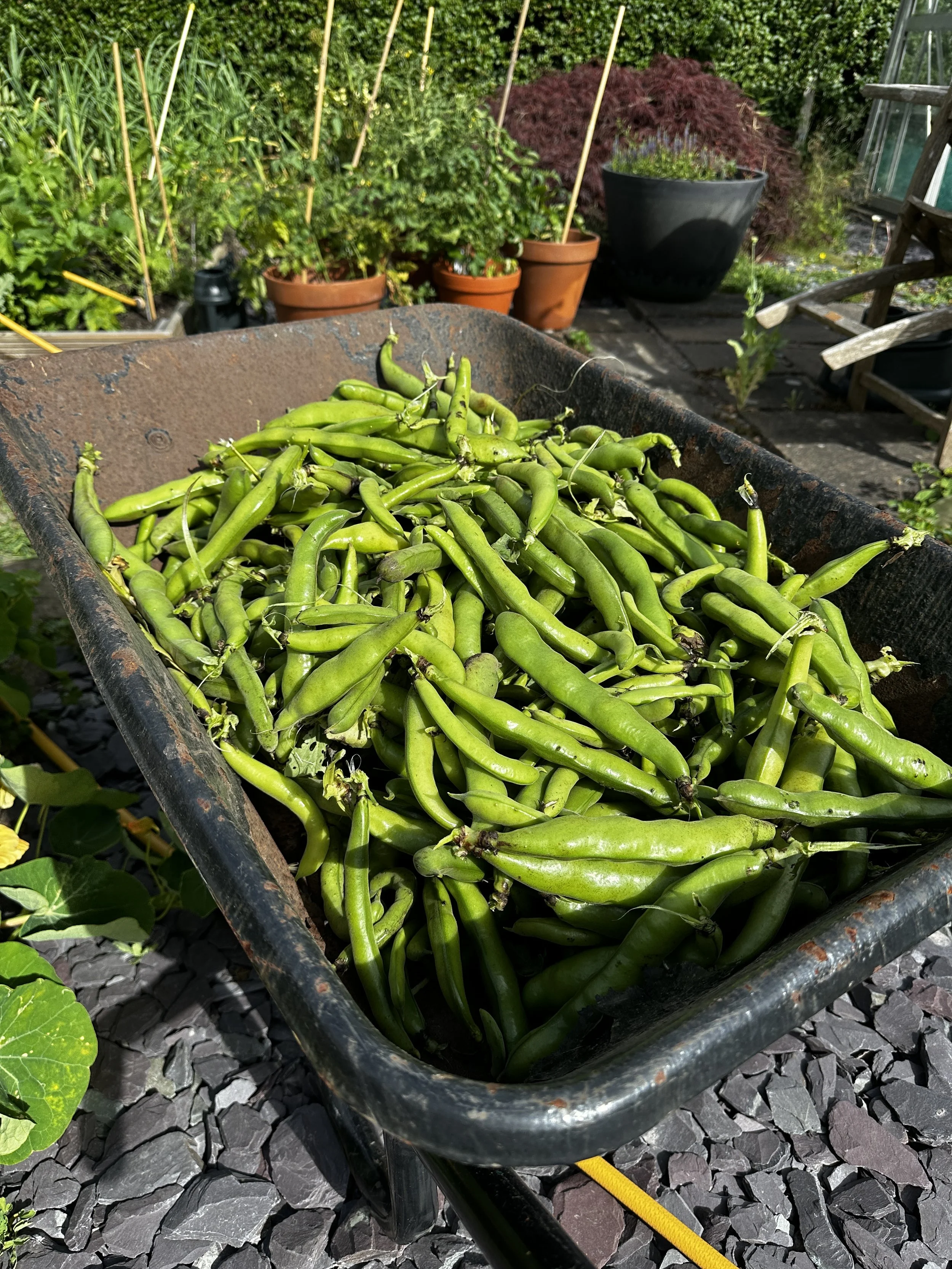
Broad bean final harvest
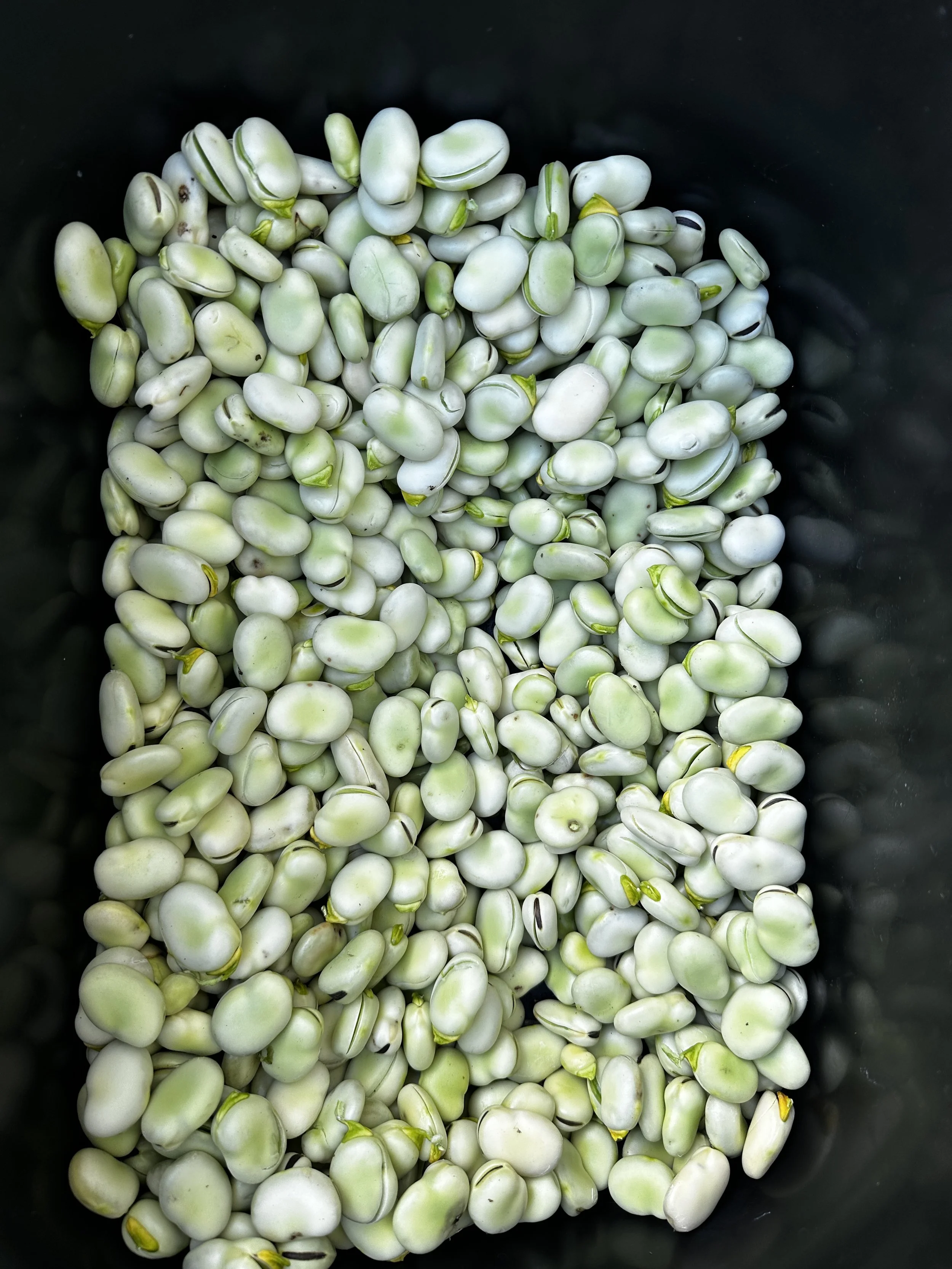
More than 3 kilos of broad beans
The final harvest came in at just over 3 kilos of beans. It took me about 90 minutes to shell them. I ate quite a few raw - they were soft in the mouth and had a slightly nutty flavour - very pleasant. Even Badger got in on the act, stealing the occasional pod from the wheelbarrow.
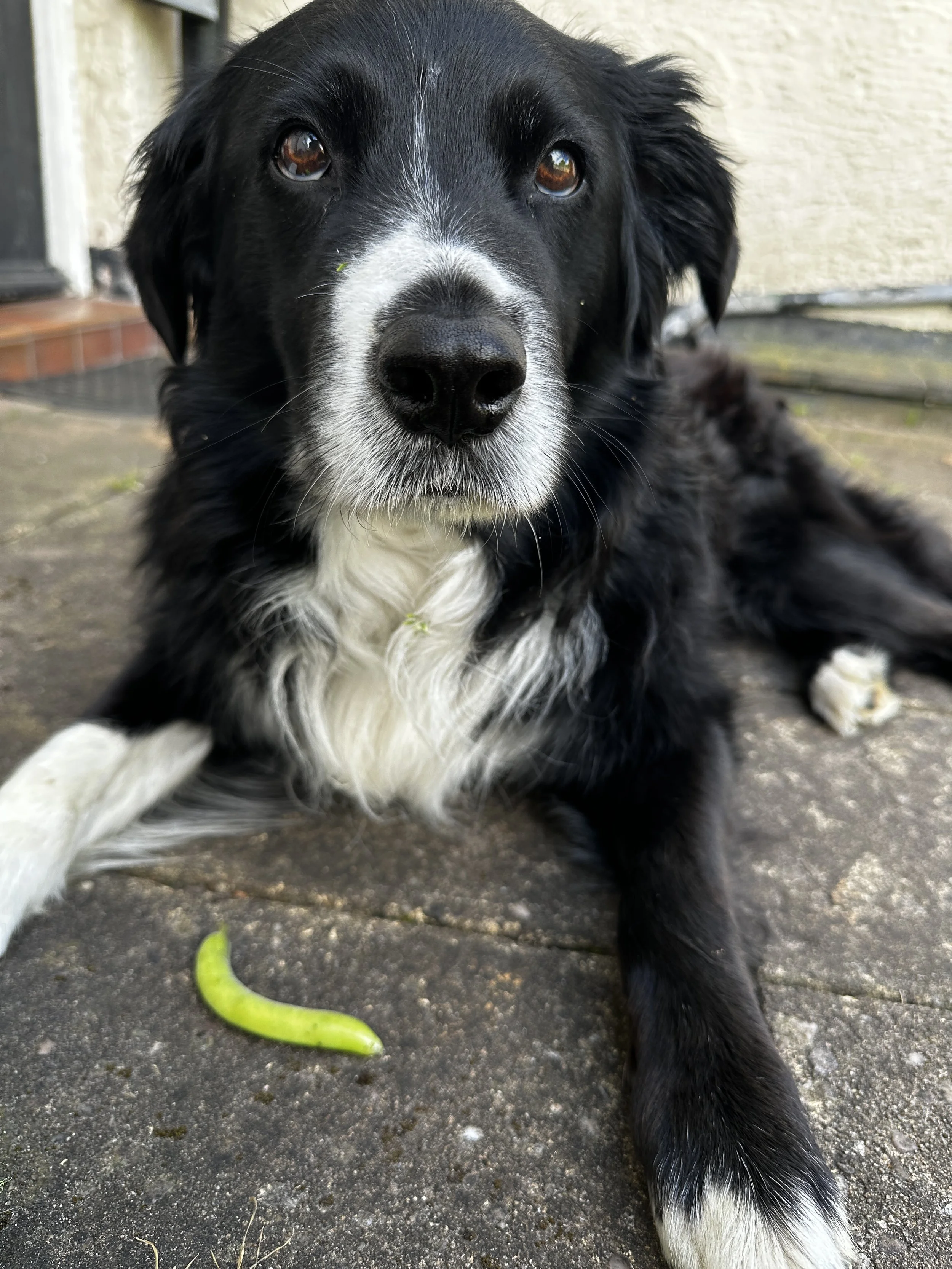
Badger
I then blanched them before freezing them down. The idea behind blanching them is to curtail certain enzymes from degrading the bean. If you freeze vegetables without blanching them first, the enzymes continue to degrade colour, flavour, texture, and nutritional content over the weeks and months. Blanching denatures the enzymes, effectively switching them off before you freeze.
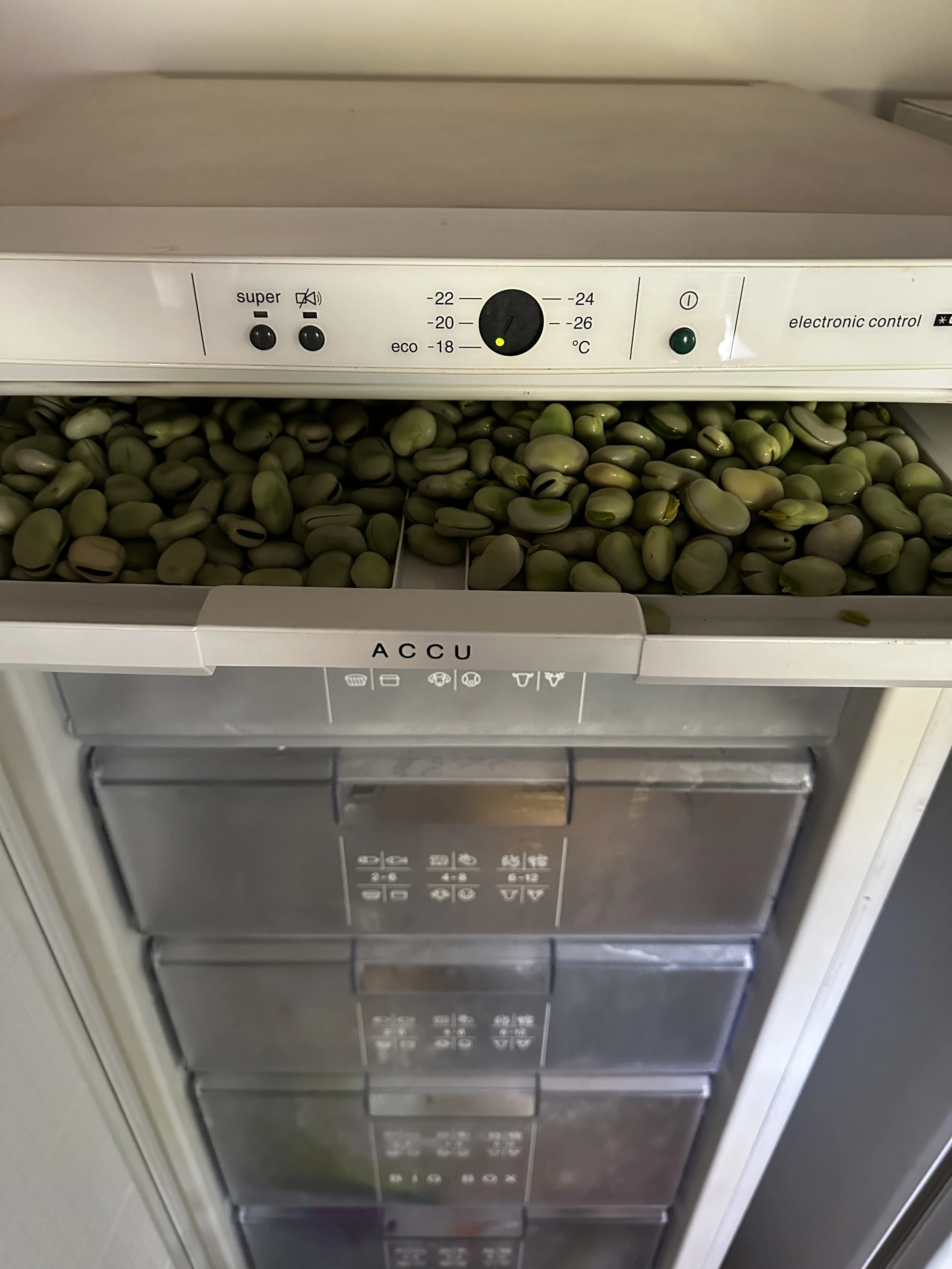
Freezing the beans down after blanching and drying.
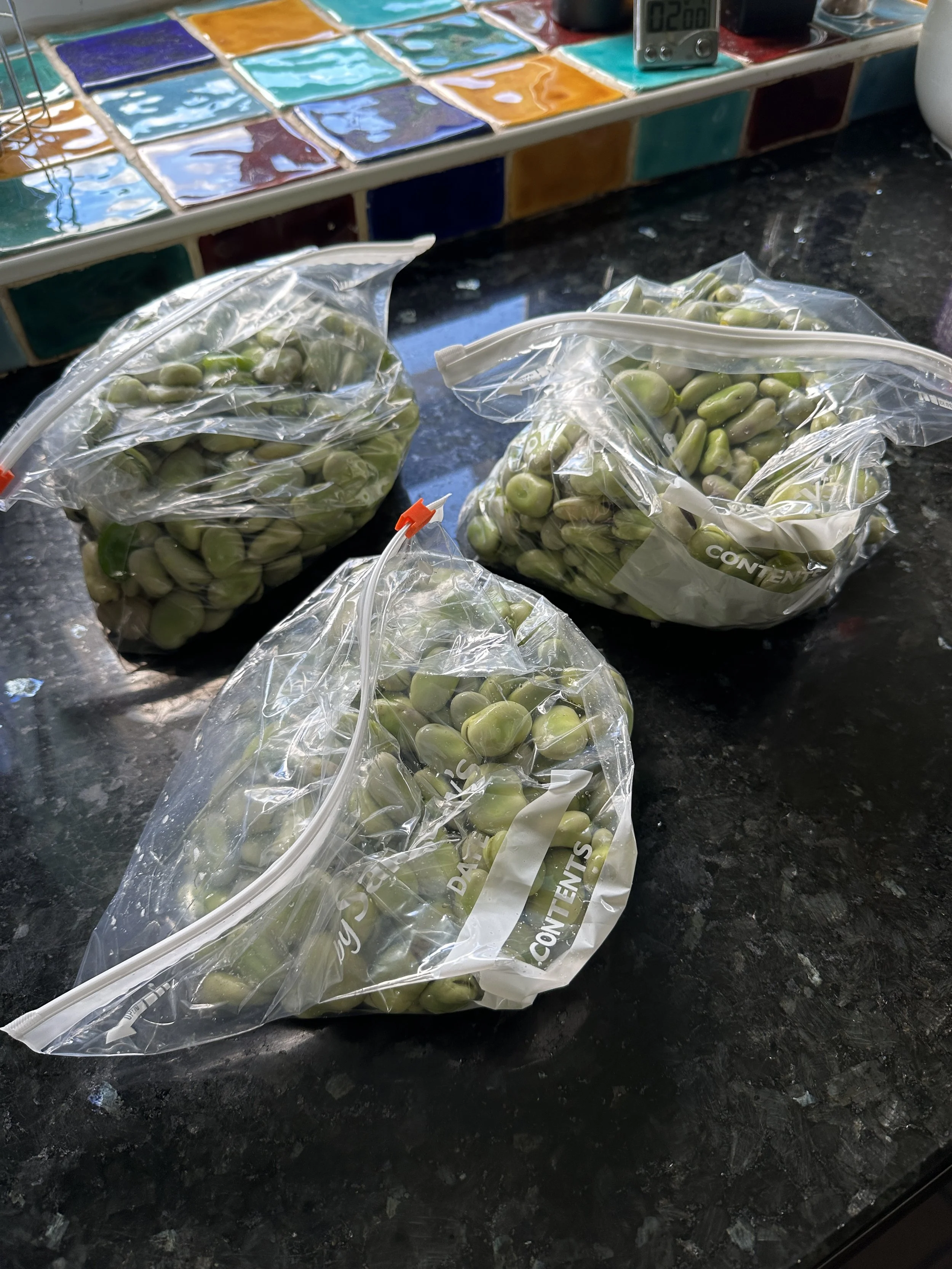
Once frozen, the beans are bagged for one of the freezer draws.
